

Custom Railing Solutions Explained: Design, Safety, Value
Finding the perfect balance between strength, design flexibility, and regulatory compliance can often be the deciding factor in a successful renovation project. For architects and contractors in Bulgaria, custom stainless steel railing solutions are the trusted choice to achieve both uncompromising safety and striking visual impact in residential and commercial spaces. This guide unpacks how tailored railing systems enhance durability, meet stringent European standards, and bring unique architectural visions to life.
Table of Contents
- What Custom Railing Solutions Really Mean
- Types and Materials for Custom Railings
- Design, Compliance, and Safety Standards
- Ordering, Fabrication, and Installation Process
- Costs, Common Pitfalls, and Smart Choices
Key Takeaways
| Point | Details |
|---|---|
| Custom Railings Enhance Design | Custom railing solutions are designed to meet specific safety and aesthetic needs, transforming functional barriers into strategic design elements. |
| Material Selection Is Critical | High-grade materials like AISI 304 and 316 stainless steel provide durability and require minimal maintenance, making them ideal for various environments. |
| Compliance and Safety Are Essential | Adherence to local regulations and safety standards is crucial for ensuring structural integrity and user protection in custom railing installations. |
| Investment Requires Strategic Planning | Custom railings often come with higher upfront costs, but their long-term performance and minimal maintenance can make them economically advantageous overall. |
What Custom Railing Solutions Really Mean
Custom railing solutions represent far more than simple metal barriers or architectural accessories. They are precision-engineered systems designed to meet specific safety, aesthetic, and functional requirements for residential and commercial spaces. When architects and contractors explore steel railing design options, they are essentially selecting comprehensive solutions that balance technical performance with visual appeal.
At their core, custom railings transform structural necessities into strategic design elements. These solutions go beyond standard measurements and generic materials, offering tailored approaches that adapt to unique architectural contexts. Stainless steel railings, particularly those made from high-grade AISI 304 or 316 materials, provide unparalleled durability, corrosion resistance, and minimal maintenance requirements. Contractors working on Bulgarian renovation projects can leverage these solutions to deliver installations that meet rigorous European safety standards while maintaining elegant design aesthetics.
The true value of custom railing solutions lies in their adaptability. Whether designing for a modern apartment complex in Sofia or a historic renovation in Plovdiv, these systems can be precisely configured to address specific spatial constraints, load-bearing requirements, and design preferences. Architects can select from various mounting styles, choose specific baluster configurations, and integrate complementary materials like tempered glass or architectural aluminum to create truly unique visual statements.
Pro tip: When selecting custom railing solutions, always request detailed technical specifications and load-bearing certifications to ensure complete compliance with local building regulations and safety standards.
Types and Materials for Custom Railings
Custom railing solutions encompass a diverse range of materials and design configurations, each offering unique characteristics tailored to specific architectural requirements. Steel and aluminum railings provide exceptional strength and design versatility, enabling architects and contractors to create sophisticated structural elements that seamlessly integrate safety and aesthetic appeal.
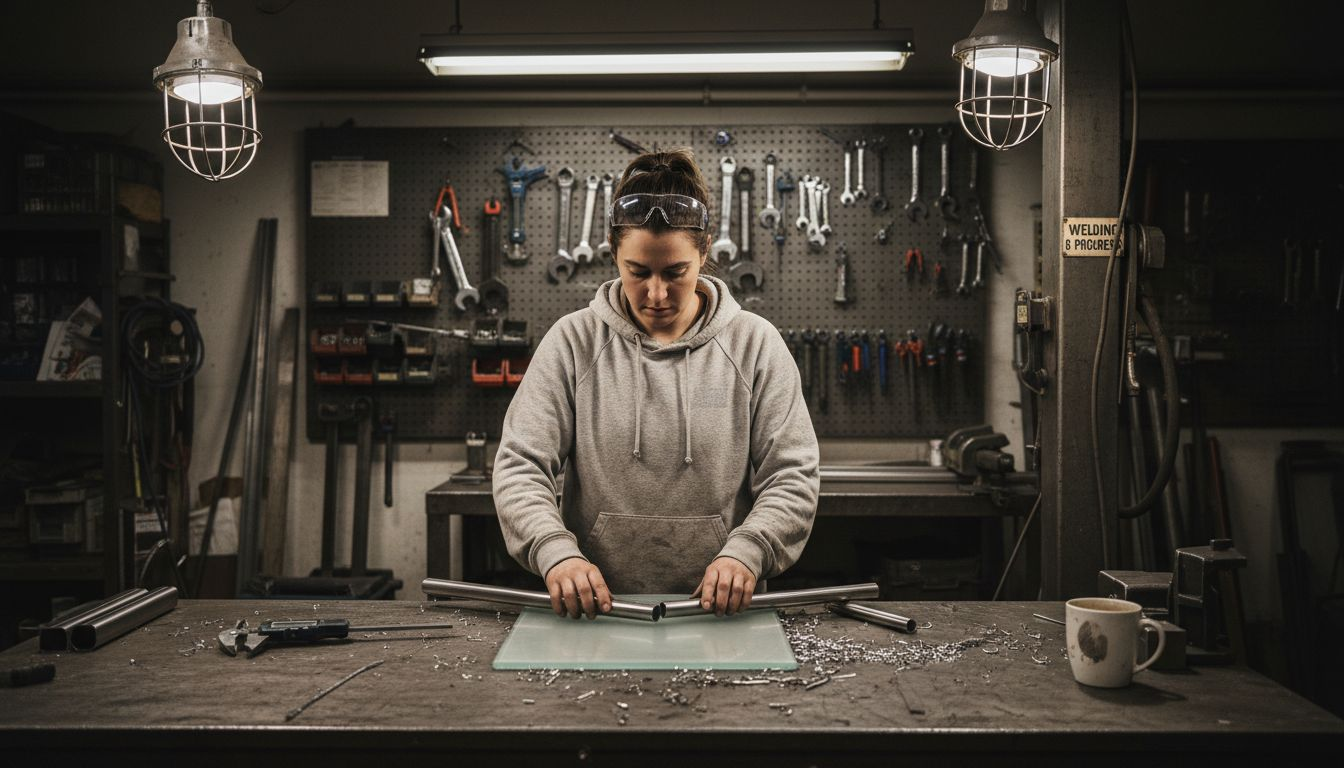
Stainless steel remains the premier choice for custom railings, particularly in environments demanding superior durability and corrosion resistance. High-grade AISI 304 and 316 stainless steel variants offer remarkable performance characteristics, including minimal maintenance requirements and exceptional load-bearing capabilities. These materials can be fabricated into intricate designs, from minimalist horizontal bars to complex geometric configurations, allowing unprecedented design flexibility for residential and commercial projects.
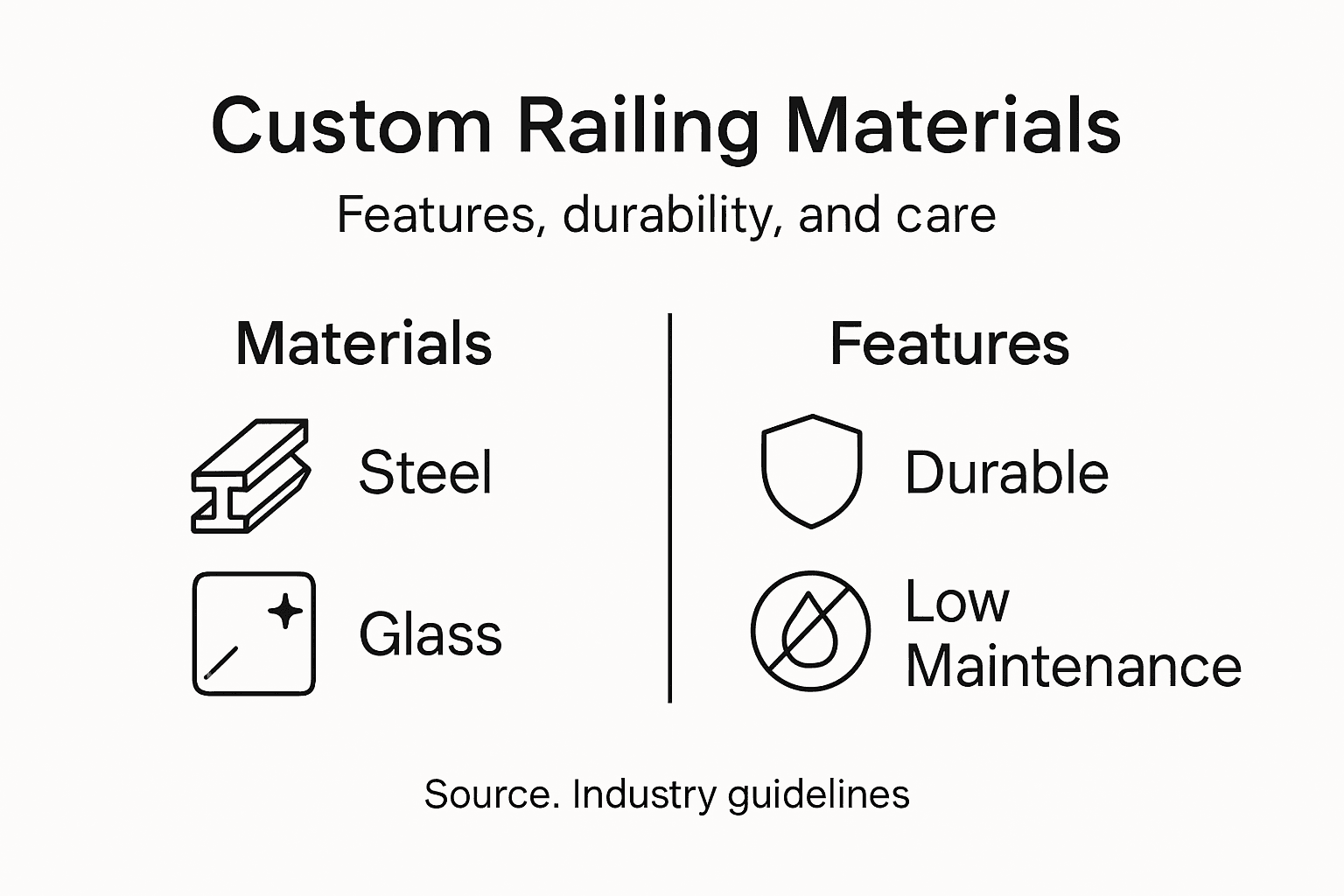
Beyond metal options, custom railing solutions also incorporate complementary materials like tempered glass, architectural aluminum, and engineered composites. Glass panels, for instance, provide transparent barriers that maximize natural light transmission and create visual openness, while aluminum components offer lightweight structural support with remarkable rust resistance. Each material selection requires careful consideration of environmental conditions, aesthetic goals, and performance requirements to ensure optimal long-term functionality.
Pro tip: Always consult metallurgical specifications and conduct comprehensive load-testing before finalizing custom railing material selections to guarantee structural integrity and compliance with local building regulations.
Here is a comparison of major custom railing materials and their key properties:
| Material | Durability | Maintenance Needs | Visual Impact |
|---|---|---|---|
| Stainless Steel | Exceptional, resists corrosion | Minimal, wipe and inspect | Modern, shiny finish |
| Architectural Aluminum | Rust-resistant, moderate strength | Low, occasional cleaning | Sleek, matte appearance |
| Tempered Glass | High impact resistance | Regular cleaning needed | Transparent, open feel |
| Engineered Composites | Varies by blend, durable | Depends on material type | Can mimic wood or metal |
Design, Compliance, and Safety Standards
Custom railing solutions demand rigorous adherence to complex safety regulations and design standards that extend far beyond aesthetic considerations. Stainless steel railing standards encompass multiple technical specifications that ensure structural integrity, load-bearing capacity, and user protection across residential and commercial environments.
The compliance landscape for custom railings involves intricate requirements from multiple regulatory bodies. European building codes mandate specific height restrictions, maximum gap measurements between balusters, and precise load-bearing specifications that vary depending on the installation location. For Bulgarian architectural projects, this means carefully calculating horizontal and vertical load tolerances, accounting for potential dynamic and static pressure scenarios, and selecting materials that can withstand extreme temperature variations and environmental stress.
Engineering precision plays a critical role in meeting safety standards. Architects and contractors must consider factors like material strength, connection point integrity, mounting techniques, and potential stress points. Stainless steel railings must undergo comprehensive testing to verify their ability to resist lateral forces, prevent accidental falls, and maintain structural stability under varying conditions. This involves sophisticated engineering calculations that assess potential failure points, material fatigue, and long-term performance characteristics.
Pro tip: Request comprehensive load testing documentation and third-party certification reports when selecting custom railing solutions to ensure complete regulatory compliance and structural reliability.
Ordering, Fabrication, and Installation Process
Custom railing solutions require a sophisticated approach to ordering, fabrication, and installation that demands precision and technical expertise. Selecting stainless steel railings involves a comprehensive multi-step process that transforms architectural vision into functional, safety-compliant structural elements.
The ordering process begins with detailed site measurements and comprehensive project specifications. Architects and contractors must provide precise dimensional data, including exact mounting locations, required load-bearing specifications, and environmental context. This initial consultation phase involves detailed technical drawings, material selection assessments, and potential site surveys to ensure absolute compatibility between the custom railing design and the specific architectural environment. Advanced computer-aided design (CAD) technologies enable precise digital modeling, allowing clients to visualize the final product before fabrication begins.
Fabrication represents a critical stage where engineering precision meets material expertise. Stainless steel components undergo multiple manufacturing stages, including cutting, welding, polishing, and finishing processes that ensure structural integrity and aesthetic excellence. Skilled metalworkers utilize advanced techniques like laser cutting, precision welding, and computer-controlled machining to create railings that meet exacting European safety standards. Each component undergoes rigorous quality control checks, including stress testing, surface integrity assessments, and dimensional verification to guarantee performance and longevity.
Pro tip: Request a detailed fabrication workflow and quality assurance documentation to understand the precise manufacturing steps and quality control mechanisms used in your custom railing production.
Costs, Common Pitfalls, and Smart Choices
Custom railing solutions represent a significant investment that requires strategic financial planning and comprehensive understanding of potential challenges. Custom versus prefabricated railings involve nuanced cost considerations that extend far beyond initial material expenses, demanding careful evaluation of long-term value and performance characteristics.
The financial landscape of custom railings is complex, with initial costs typically ranging 30-50% higher than standard prefabricated options. These increased expenses stem from bespoke design processes, precision fabrication, and specialized material selections. Architects and contractors must consider not just the upfront investment, but also long-term maintenance requirements, durability, and potential replacement costs. Stainless steel solutions, while more expensive initially, often prove more economical over their lifecycle due to minimal maintenance needs, superior corrosion resistance, and extended structural integrity.
Navigating potential pitfalls requires a proactive approach to project planning and material selection. Common mistakes include underestimating project complexity, neglecting local building code requirements, and choosing materials inappropriate for specific environmental conditions. Smart choices involve comprehensive site assessments, detailed consultations with experienced fabricators, and thorough understanding of performance specifications. Successful custom railing projects balance aesthetic aspirations with practical engineering constraints, ensuring both visual appeal and structural reliability.
To help guide successful custom railing projects, here is a summary of common pitfalls and smart solutions:
| Challenge | Common Misstep | Smart Solution |
|---|---|---|
| Complexity Underestimation | Incomplete site assessment | Conduct detailed site evaluations |
| Regulatory Compliance | Overlooking local code specifics | Review regulations before design |
| Material Selection | Choosing unsuitable materials | Match materials to environment |
| Lifecycle Costs | Focusing solely on upfront price | Request maintenance cost analysis |
Pro tip: Request detailed lifecycle cost analysis and maintenance projections from your railing manufacturer to understand the true long-term financial implications of your custom railing investment.
Elevate Your Project with Reliable Custom Railing Solutions
Understanding the importance of safety compliance and design flexibility is crucial when selecting custom railing solutions. If you are facing challenges such as ensuring durability, meeting European safety standards, or achieving a perfect aesthetic for your architectural project, Inoxify.bg offers ready-to-install stainless steel railing systems that address these key concerns. Explore our Готови колонки - Inoxify collection to find durable, corrosion-resistant components crafted from high-grade AISI 304 and 316 stainless steel tailored for both interior and exterior use.
Take control of your project today by choosing expertly manufactured, compliant, and visually striking railing systems from Inoxify.bg. For precision fit and lasting value, check our range of Крайни елементи - Inoxify to complete your installation seamlessly. Act now to benefit from fast delivery and professional guidance ensuring your railing project combines safety, style, and long-term performance.
Frequently Asked Questions
What are custom railing solutions?
Custom railing solutions are precision-engineered systems designed to meet specific safety, aesthetic, and functional requirements for both residential and commercial spaces, transforming structural necessities into strategic design elements.
What materials are commonly used for custom railings?
Common materials for custom railings include stainless steel, architectural aluminum, tempered glass, and engineered composites. Each material has unique characteristics, such as durability, maintenance needs, and visual impact, making them suitable for different architectural requirements.
How do custom railings ensure safety and compliance with building regulations?
Custom railings adhere to rigorous safety regulations and building standards, which include specifications for height, baluster gaps, and load-bearing capacities. Engineers must conduct thorough calculations and testing to ensure structural integrity and safety for users.
What factors influence the cost of custom railing solutions?
The cost of custom railing solutions can be influenced by factors such as design complexity, material selection, fabrication processes, and compliance with safety standards. While initially more expensive than prefabricated options, custom railings may offer better long-term value due to their durability and low maintenance needs.