

Стандарти за парапети в България 2026: Ръководство
Много специалисти вярват, че хоризонталните елементи в парапетите са напълно безопасни, ако се спазва основната височина. Това е заблуда, която може да доведе до сериозни инциденти и административни проблеми. Българските нормативи забраняват такива елементи именно защото улесняват катеренето на деца. В това ръководство ще разгледаме актуалните стандарти за 2026 година, материалите, които отговарят на изискванията, и практическите стъпки за законосъобразно проектиране на безопасни парапети.
Съдържание
- Ключови изводи
- Въведение в стандартите за парапети в българия
- Основни нормативни изисквания и разпоредби
- Материали и технологии за парапети
- Значението на стандартите за безопасност и практическо приложение
- Често срещани заблуди и грешки при проектиране на парапети
- Препоръки и насоки за проектиране и изпълнение
- Открийте решения за парапети с inoxify
- Често задавани въпроси
Ключови изводи
| Точка | Детайли |
|---|---|
| Минимални височини | Парапетите трябва да са минимум 1,05 м за жилищни и 1,20 м за високи сгради, за да осигурят безопасност |
| Разстояния между елементи | Максималното разстояние между вертикалните елементи е 9 см, за да се предотврати преминаване на деца |
| Забрана на хоризонтални елементи | Хоризонталните елементи са строго забранени, защото служат като стъпала за катерене |
| Одобрени материали | AISI 304 и 316 неръждаема стомана и закалено стъкло осигуряват необходимата корозионна устойчивост |
| Влияние върху Акт 16 | Спазването на стандартите е задължително условие за получаване на разрешение за ползване на сградата |
Въведение в стандартите за парапети в България
Парапетите изпълняват критична роля за безопасността в сгради с височина над земята, защитавайки хората от падания и инциденти. В България проектирането и изграждането им се регулират от строги нормативи, които определят минимални височини, максимални разстояния между елементите и забрани на опасни конструктивни решения. Основният нормативен акт е Наредба № 7 от 2003 г. за правила и нормативи за устройство на отделните видове територии и устройствени зони, допълнена с последващи изменения.
Допълнителни изисквания са заложени в Наредба № РД-02-20-3 от 2015 г., която урежда специфични аспекти на безопасността. Тези документи са създадени, за да минимизират риска от инциденти, особено когато ползвателите включват деца. Парапетите трябва да бъдат конструирани без хоризонтални елементи, които позволяват катерене.
Отговорност за контрола върху спазването на нормите носят общинските администрации и ДНСК. При издаване на разрешение за строеж и при окончателните проверки се извършва подробна проверка дали парапетите отговарят на всички изисквания. Несъответствията водят до отказ за издаване на Акт 16 и изискване за корекции. Нормативната рамка се актуализира периодично, за да отговори на нови изисквания за безопасност и строителни практики.
Основни моменти за архитекти и строители:
- Височината на парапета се измерва от завършената настилка до горния ръб на парапета
- Изискванията варират в зависимост от предназначението на пространството и височината на сградата
- Контролът се извършва както в проектната фаза, така и при приемането на строежа
- Значението на парапет е не само функционално, но и правно
Спазването на наредба РД-02-20-3 гарантира, че конструкцията е безопасна и съответства на актуалните изисквания за 2026 година.
Основни нормативни изисквания и разпоредби
Българските разпоредби за парапети определят ясни параметри за безопасност. Минималната височина за жилищни сгради е 1,05 метра, докато за високи сгради и обществени пространства се изисква минимум 1,20 метра. Тези стойности са базирани на антропометрични данни и статистики за инциденти с падания.
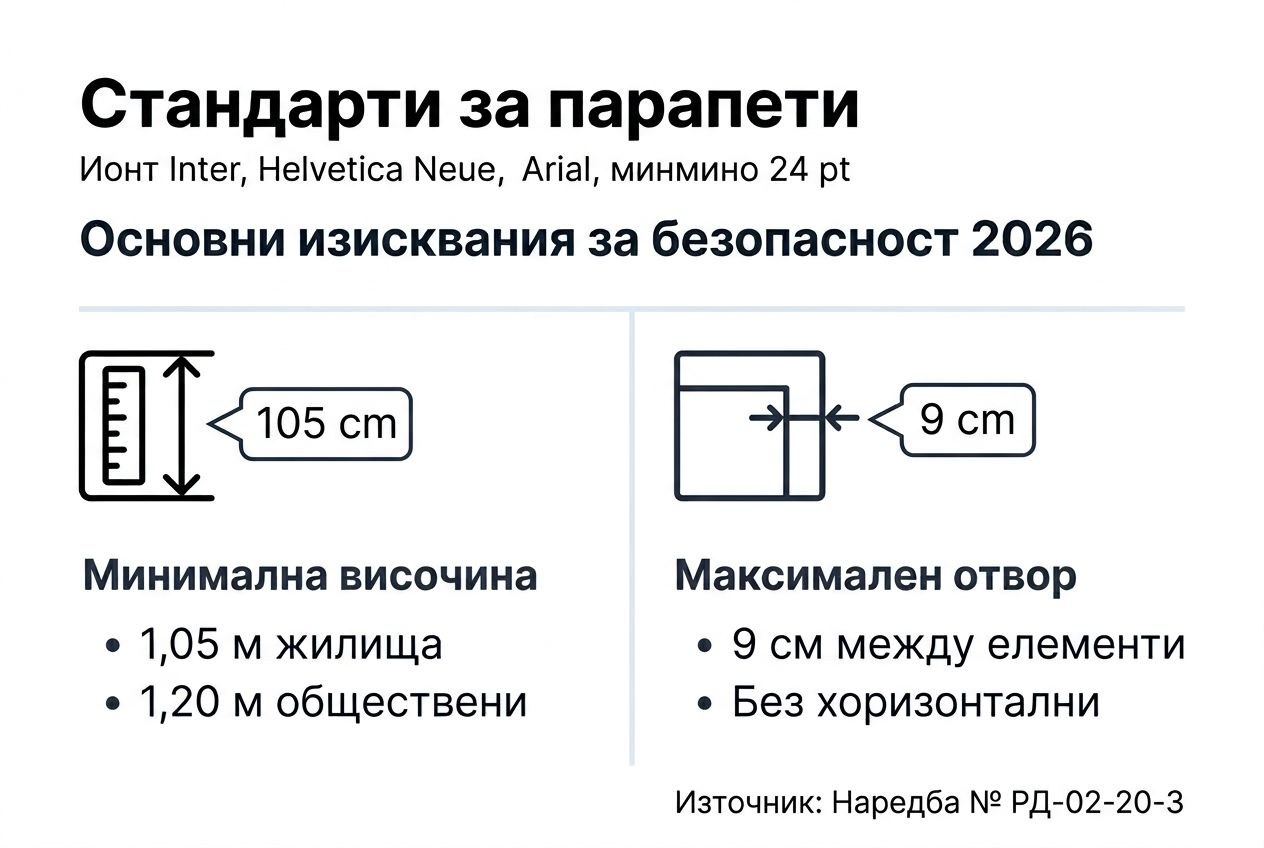
Разстоянието между вертикалните елементи е друг критичен параметър. Максималният отвор от 9 см между вертикалните елементи е определен, за да се предотврати преминаването или заклещването на глава на малко дете. Този стандарт е хармонизиран с европейските практики и е задължителен за всички типове сгради.
Забраната на хоризонтални елементи е категорична. Наредбата изрично посочва, че конструкцията не трябва да включва елементи, които могат да бъдат използвани като стъпала. Дори декоративни хоризонтални пръти са недопустими, ако са разположени на височина, достъпна за катерене.
| Тип сграда | Минимална височина | Максимален отвор | Хоризонтални елементи |
|---|---|---|---|
| Жилищни до 4 етажа | 1,05 м | 9 см | Забранени |
| Жилищни над 4 етажа | 1,20 м | 9 см | Забранени |
| Обществени сгради | 1,20 м | 9 см | Забранени |
| Тераси и балкони | 1,05 м | 9 см | Забранени |
| Стълбища евакуационни | 1,20 м | 9 см | Забранени |
Наредба № 7 от 2003 г. и последващите ѝ изменения обхващат и материалните изисквания, натоварванията, които парапетът трябва да издържа, и начините за закрепване. Неспазването на тези разпоредби води до административни санкции, задължение за премахване или преустройство на конструкцията и невъзможност за получаване на Акт 16.
Ключови забрани и изисквания:
- Забрана за остри ръбове и изпъкнали елементи, които могат да нараняват
- Задължително изискване за устойчивост на хоризонтално натоварване минимум 0,6 kN/m
- Необходимост от сертификати за използваните материали
- Задължителна проверка на конструктивната стабилност преди приемане
Архитектите трябва да интегрират тези параметри още в началната фаза на проектиране на парапети, за да избегнат скъпи корекции по-късно. Съответствието с наредбата за парапети е първата стъпка към успешно приемане на обекта.
Материали и технологии за парапети
Изборът на материали за парапети е критичен за спазване на стандартите и дългосрочната безопасност. Неръждаемата стомана AISI 304 и AISI 316 са най-препоръчителните материали за външни и вътрешни приложения. AISI 304 е подходяща за вътрешни пространства и по-малко агресивни среди, докато AISI 316 с добавено молибден осигурява отлична корозионна устойчивост дори в крайбрежни зони.
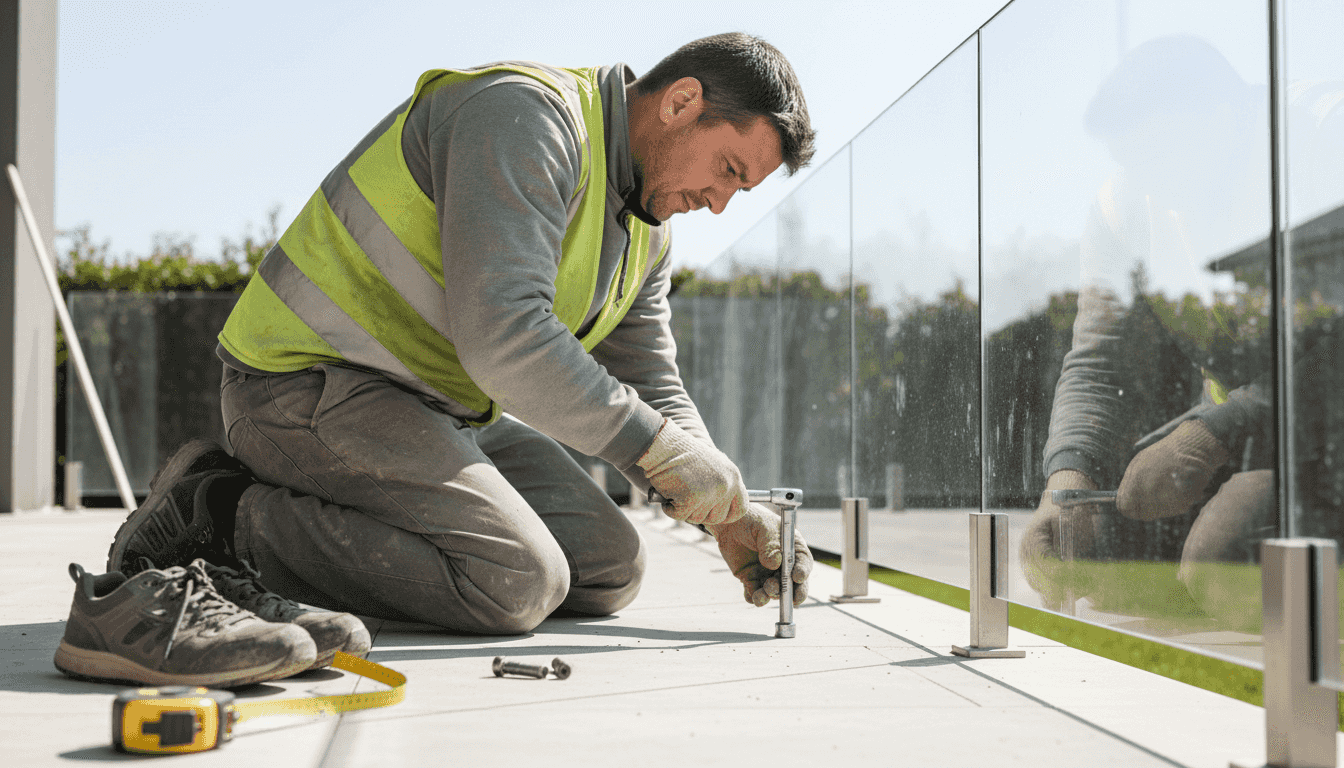
Закаленото стъкло се използва все по-често в съвременното строителство, особено за балконски и терасни парапети. Дебелината на стъклото трябва да е минимум 10 мм за вътрешни приложения и 12 мм за външни. Стъклото трябва да отговаря на стандарт EN 12150 за безопасност при счупване. Алуминиевите профили също са популярни, но изискват специално покритие за защита от корозия.
| Материал | Предимства | Недостатъци | Приложение |
|---|---|---|---|
| AISI 304 | Висока корозионна устойчивост, естетичен вид | По-висока цена от обикновената стомана | Вътрешни стълбища, балкони |
| AISI 316 | Отлична устойчивост на солена среда | Най-висока цена | Крайбрежни зони, високи изисквания |
| Закалено стъкло | Модерен вид, прозрачност | Тежест, необходимост от специални крепежи | Тераси, модерни интериори |
| Алуминий с покритие | Лек, лесен монтаж | По-ниска устойчивост на механично натоварване | Вътрешни приложения с по-ниски изисквания |
Технологиите за монтаж включват заваряване, механично свързване с болтове и използване на специализирани системи за стъклени парапети. Заваряването осигурява най-висока стабилност, но изисква квалифицирани специалисти и последваща обработка на заварените места.
Професионален съвет: Винаги изисквайте сертификат за произход и качество на неръждаемата стомана. Много доставчици предлагат по-евтини алтернативи, които не отговарят на спецификациите AISI 304 или 316, което води до корозия и необходимост от подмяна след няколко години.
Насоки за поддръжка:
- Редовно почистване с неутрални препарати за премахване на замърсявания
- Проверка на крепежните елементи веднъж годишно
- Преглед за признаци на корозия или механични повреди
- При стъклени парапети проверка за пукнатини или отлепване на стъклото
Качествените материали и правилният монтаж осигуряват дългосрочна безопасност, съответствие с нормативите и минимални разходи за поддръжка. Повече информация за функции и материали за парапети може да намерите в специализираните ресурси.
Значението на стандартите за безопасност и практическо приложение
Правилното проектиране и изпълнение на парапети намалява значително риска от падания и сериозни наранявания. Статистиката показва, че повечето инциденти с падания от височина в жилищни сгради са свързани с несъответстващи на стандартите парапети или с пълната им липса. Спазването на нормите е не само морална отговорност, но и правно изискване.
При подаване на документи за Акт 16 контролните органи извършват подробна проверка на всички безопасностни елементи, включително парапетите. Несъответствията водят до забавяне на издаването на разрешението и необходимост от корекции. В някои случаи може да се наложи пълна подмяна на конструкцията, което е скъпо и отнема време.
Противопожарната безопасност е друг важен аспект. Евакуационните стълбища трябва да имат парапети с височина минимум 1,20 метра, за да осигурят безопасно движение при евакуация. Материалите трябва да бъдат негорими и да не отделят токсични газове при пожар. Неръждаемата стомана и стъклото отговарят на тези изисквания.
"Парапетите са последната линия на защита при падане от височина. Инвестицията в качествени материали и правилен монтаж е несравнимо по-малка от разходите за лечение на пострадали или от юридическите последствия на инцидент." – Инж. Иван Петров, строителен експерт с 20-годишен опит
Професионален съвет: При проектиране на детски градини, училища и обществени сгради добавете 10-15 см към минималната изискуема височина. Това осигурява допълнителна сигурност без значително увеличение на разходите.
Практически примери за проблеми:
- Парапети с височина 0,95 м вместо изискуемите 1,05 м водят до отказ за издаване на Акт 16
- Използване на хоризонтални елементи за декоративни цели е често срещана грешка
- Разстояния между вертикалните пръти от 12 см вместо максимум 9 см представляват опасност
- Недостатъчно закрепване на парапета към конструкцията на сградата
Контролът по време на монтаж е задължителен. Препоръчва се присъствието на технически ръководител, който да провери съответствието с проекта и стандартите преди завършване на работата. Повече за ролята на парапетите в строителството и пожарната безопасност на парапети може да научите от специализирани източници.
Често срещани заблуди и грешки при проектиране на парапети
Една от най-опасните заблуди е, че хоризонталните елементи са приемливи, стига общата височина на парапета да е достатъчна. Практиката обаче показва, че децата инстинктивно използват хоризонталните пръти като стъпала и могат да достигнат върха на парапета. Дори един хоризонтален елемент на височина 30-40 см е достатъчен, за да създаде опасност.
Грешките с височината също са чести. Много проектанти измерват височината от грубата настилка, а не от завършената. Разликата от 5-7 см след полагането на плочки или паркет може да доведе до парапет с недостатъчна височина. Винаги измервайте от завършената настилка.
Подценяването на максималното разстояние между елементите е друга честа грешка. Разстояние от 10-12 см между вертикалните пръти може да изглежда безопасно, но позволява на малко дете да премине главата си, което е опасно. Стандартът от 9 см е базиран на антропометрични изследвания и трябва да се спазва стриктно.
Често срещани недостатъци:
- Използване на дървени парапети без сертификат за огнеустойчивост в евакуационни стълбища
- Липса на документация за произхода и качеството на използваната неръждаема стомана
- Неправилно закрепване на стъклените панели без използване на специализирани профили
- Игнориране на изискванията за хоризонтално натоварване при избор на конструкцията
- Монтаж на парапети с декоративни елементи, които могат да се използват за катерене
Много специалисти недооценяват нуждата от внимателни детайли при проектиране на детски пространства. Детските градини и училищата изискват повишено внимание, включително закръгляване на ръбовете и премахване на всякакви остри или изпъкнали части. За да избегнете тези грешки, следвайте препоръките за правилно проектиране на парапети.
Препоръки и насоки за проектиране и изпълнение
За да осигурите пълно съответствие с българските стандарти и безопасно изпълнение, следвайте тези стъпки систематично. Планирането и внимателният подбор на материали са основата за успешен проект.
- Изберете сертифицирани материали: Използвайте само AISI 304 или 316 неръждаема стомана с документи за произход. При стъклени парапети изисквайте сертификат EN 12150.
- Проектирайте според конкретното приложение: Определете точната минимална височина според типа сграда и предназначението на пространството. За жилищни сгради до 4 етажа 1,05 м е минимумът, за по-високи и обществени 1,20 м.
- Спазвайте разстоянията между елементите: Максимум 9 см между вертикалните пръти без изключение. Използвайте шаблон при монтажа за проверка.
- Избягвайте хоризонтални елементи: Проектирайте само с вертикални пръти или стъклени панели. Всяка хоризонтална греда на достъпна височина е нарушение.
- Осигурете правилно закрепване: Парапетът трябва да издържи хоризонтално натоварване минимум 0,6 kN/m. Използвайте химически анкери или заваряване към стоманената конструкция.
- Извършете проверка преди приемане: Преди подаване за Акт 16 проверете всички размери с измервателни инструменти и документирайте съответствието.
Професионален съвет: Създайте контролен списък с всички нормативни изисквания и го използвайте на етапа на проектиране, по време на монтажа и при финалната проверка. Това елиминира риска от пропуски.
Редовната поддръжка е също толкова важна, колкото правилното изпълнение. Планирайте годишни проверки на крепежните елементи, почиствайте парапетите от замърсявания и проверявайте за корозия или механични повреди. При стъклени конструкции следете за пукнатини.
Документирането е ключово. Съхранявайте всички сертификати за материали, снимки от монтажа и протоколи от проверките. Тази документация е необходима при подаване за Акт 16 и при евентуални бъдещи ремонти. За нестандартни решения разгледайте възможностите за проектиране на дизайнерски парапети, които съчетават безопасност и естетика.
Когато стандартите са изпълнени, изборът на правилната система е следващата стъпка. Разгледайте нашите парапети за стълби — със сравнение по материал, цени и нормативни изисквания, за да изберете решение, което отговаря на проекта ви.
Открийте решения за парапети с Inoxify
След като разгледахме всички технически и нормативни аспекти, естествено възниква въпросът къде да намерите качествени решения, които отговарят на стандартите. Inoxify предлага широка гама парапетни системи от неръждаема стомана AISI 304 и 316, проектирани специално за българския пазар и напълно съобразени с актуалните нормативи.
Всяка система е готова за монтаж и идва с подробни инструкции и необходимата документация за сертификация. Парапетите за стълбища осигуряват безопасност и издръжливост, докато парапетите за тераса съчетават функционалност и естетика. За специфични архитектурни изисквания закръглените парапетни системи предлагат елегантни решения за кръгли балкони и тераси.
Екипът на Inoxify предоставя експертна консултация при избор на подходящата система според вашия проект, помощ при изчисления на размерите и техническа подкрепа по време на монтажа. Производството в България гарантира бърза доставка и контрол върху качеството на всеки етап.
Често задавани въпроси
Каква е минималната височина на парапет за жилищна сграда в България?
За жилищни сгради до 4 етажа минималната височина е 1,05 метра, измерена от завършената настилка до горния ръб на парапета. За сгради над 4 етажа и обществени сгради изискването е 1,20 метра. Тези стойности са определени в Наредба № 7 и осигуряват защита от падания.
Защо са забранени хоризонталните елементи в парапетите?
Хоризонталните елементи служат като стъпала, които децата могат да използват за катерене. Дори един хоризонтален пръчки на височина 30-40 см значително увеличава риска дете да достигне върха на парапета и да падне. Наредба РД-02-20-3 категорично забранява такива елементи за осигуряване на безопасност.
Какво е максималното разстояние между вертикалните елементи?
Максималното разстояние е 9 сантиметра. Това изискване е базирано на антропометрични данни за главата на малко дете и предотвратява преминаването или заклещването. Разстояния над 9 см са нарушение на стандартите и основание за отказ на Акт 16.
Влияят ли парапетите на получаването на Акт 16?
Да, парапетите са критичен елемент при одобрението за ползване на сградата. Контролните органи проверяват височината, разстоянията между елементите, използваните материали и общата конструктивна стабилност. Несъответствията водят до забавяне или отказ на Акт 16 до коригирането им.
Как да избера материал за парапет?
Изборът зависи от местоположението и условията на експлоатация. За външни приложения и крайбрежни зони използвайте AISI 316 неръждаема стомана заради превъзходната корозионна устойчивост. За вътрешни приложения AISI 304 е отличен избор. Закаленото стъкло е подходящо за модерни тераси и балкони, но изисква специализирани крепежи.
Как често трябва да се проверяват парапетите?
Препоръчва се годишна проверка на крепежните елементи, признаци на корозия и механични повреди. При стъклени парапети проверявайте за пукнатини или отлепване на панелите. След екстремни метеорологични условия или механично натоварване извършете извънредна проверка за осигуряване на безопасност.
Свързани страници в Inoxify
Разгледайте нашите специализирани секции за оферти, цени с монтаж и техническа информация:
- Парапети – главна
- Парапети за тераси
- Парапети за стълбища
- Иноксови парапети за тераса
- Иноксови парапети за стълбище