

Алуминиев парапет: избор за сигурност и стил в строителството
Все повече строителни обекти в България избират алуминиеви парапети заради тяхната надеждност и модерен външен вид. За архитектите и предприемачите те предоставят възможност за адаптиране към различни архитектурни изисквания, като съчетават практичност и естетика. В този материал ще откриете кои характеристики отличават алуминиевите парапети, какви типове съществуват и какви грешки да се избягват при проектиране и монтаж.
Съдържание
- Какво представлява алуминиевият парапет
- Основни видове и конструкции на алуминиеви парапети
- Ключови предимства и недостатъци на алуминия
- Приложение в съвременното строителство и архитектура
- Сравнение с иноксови и други парапетни системи
- Често срещани грешки при избора и монтажа
- Видове алуминиеви профили — как да изберете правилния
- RAL цветове и повърхностна обработка — пълна цветова гама
- Алуминиеви vs Стъклени парапети — кога кое
Основни изводи
| Точка | Детайли |
|---|---|
| Алуминиевият парапет съчетава сигурност и естетика | Изборът на алуминиеви парапети осигурява безопасност и модерен вид за различни архитектурни проекти. |
| Разнообразие от дизайни и приложения | Алуминиевите парапети се предлагат в различни стилове, подходящи за различни приложения и предпочитания. |
| Важно е качеството на материалите | При избор на алуминиев парапет е необходимо да се оценят качеството на материала и сертификатите за безопасност. |
| Предварителни консултации с професионалисти | Консултацията с архитекти и инженери е ключова за успешния монтаж и избор на правилните решение. |
Какво представлява алуминиевият парапет
Алуминиевият парапет е модерно архитектурно решение за сигурност и естетика, което се използва в съвременното строителство. Парапетът представлява защитна или декоративна ограда, монтирана около открити пространства като балкони, тераси, стълбища или междинни нива, като основната му функция е да предотвратява падания и да осигурява безопасност.
Основните характеристики на алуминиевите парапети включват:
- Изключителна корозионна устойчивост
- Ниско тегло и висока издръжливост
- Модерен и елегантен външен вид
- Лесна поддръжка и дълъг експлоатационен живот
- Възможност за различни дизайнерски решения
При видовете инокс парапети можете да забележите сходни конструктивни принципи, които правят тези системи изключително функционални. Алуминиевите парапети се произвеждат от висококачествени алуминиеви профили, които могат да бъдат анодирани или прахово боядисани в различни цветове и нюанси, което позволява пълна адаптация към архитектурния стил на сградата.
Съществуват различни типове алуминиеви парапети, които се избират в зависимост от конкретното приложение:
- Стъклени алуминиеви парапети
- Парапети с вертикални или хоризонтални пръчки
- Парапети с перфорирани декоративни елементи
- Парапети с минималистичен дизайн
Про съвет: При избора на алуминиев парапет винаги обръщайте внимание на качеството на материала, дебелината на профилите и сертификатите за безопасност.
Основни видове и конструкции на алуминиеви парапети
Алуминиевите парапети предлагат разнообразие от конструктивни решения, които се адаптират към различни архитектурни стилове и функционални изисквания. Основните видове парапети се диференцират според техния дизайн, пълнеж и монтажна система, което позволява максимална гъвкавост при избора.
Най-разпространените конструкции на алуминиеви парапети включват:
- Парапети с хоризонтални струни
- Парапети с вертикален пълнеж
- Стъклени алуминиеви парапети
- Перфорирани декоративни парапети
- Минималистични парапети с прави линии
При хоризонталните парапети алуминиевите струни се разполагат хоризонтално между носещите колони, което създава модерен и елегантен външен вид. Този тип конструкция е особено подходяща за съвременни сгради и осигурява отлична видимост и усещане за простор.
Стъклените алуминиеви парапети представляват изключително популярно решение, при което алуминиевата конструкция служи като носеща рамка за закрепване на стъклени панели. Технологията на монтаж може да бъде:
- Точково фиксирани стъклени пана
- Линейно закрепени стъклени елементи
- Без видими метални елементи
- С декоративни алуминиеви профили
Изборът на конструкция зависи пряко от архитектурния проект, функционалните изисквания и естетическите предпочитания.
Перфорираните декоративни парапети предлагат възможност за artistично оформление, като алуминиевите профили се изработват с различни орнаменти и отвори, които пропускат светлина и създават интересни светлинни ефекти.
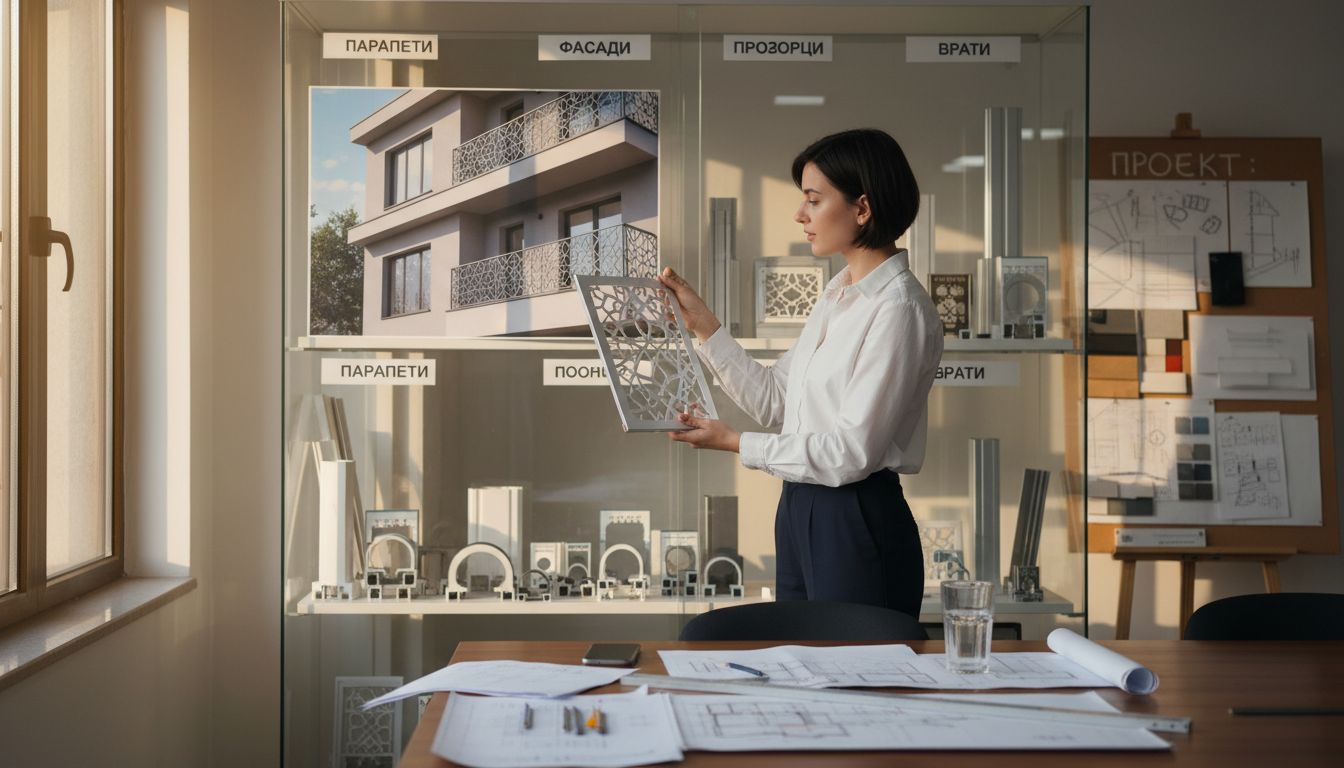
Про съвет: При избора на алуминиев парапет отчитайте не само естетиката, но и техническите параметри като товароносимост, височина и съответствие с нормативните изисквания за безопасност.
Ето сравнителен преглед на основните видове конструкции на алуминиеви парапети:
| Тип конструкция | Подходящо приложение | Дизайнерски ефект |
|---|---|---|
| Хоризонтални струни | Модерни жилища | Откритост и простор |
| Вертикален пълнеж | Обществени сгради | Класическа визия |
| Стъклени пана | Хотели, офиси | Минималистична изисканост |
| Перфорирани декоративни елементи | Архитектурни фасади | Игра със светлина и сенки |
| Минималистичен дизайн | Частни домове | Чисти линейни форми |
Ключови предимства и недостатъци на алуминия
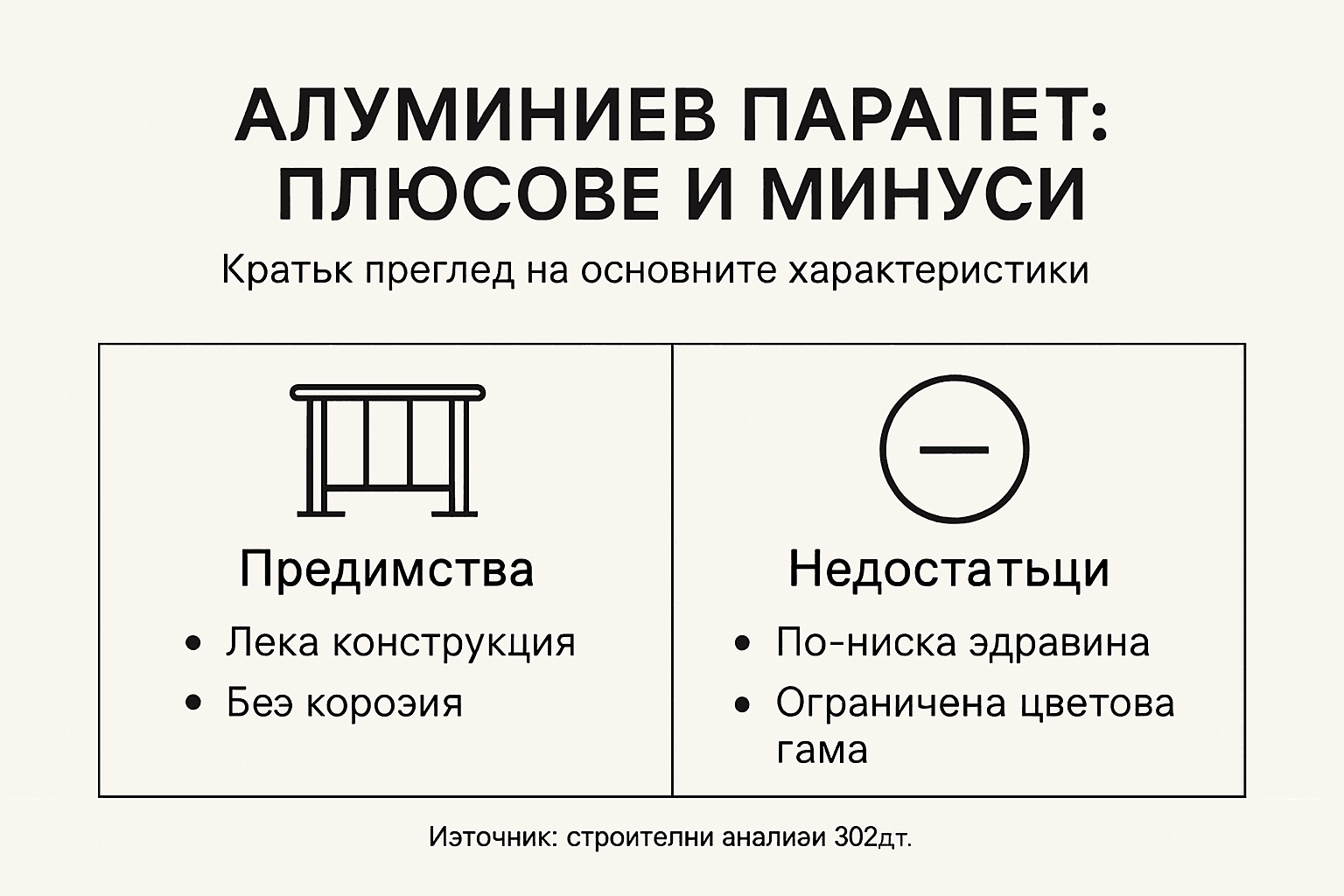
Алуминият се утвърждава като изключително популярен материал в съвременното строителство, благодарение на специфичните характеристики на метала. Неговите уникални свойства го правят предпочитан избор за производство на парапети, фасадни елементи и архитектурни конструкции.
Основните предимства на алуминия включват:
- Изключителна корозионна устойчивост
- Ниско тегло и висока здравина
- Отлична топлопроводимост
- Лесна обработка и формоване
- Дълъг експлоатационен живот
- Естетически привлекателен външен вид
Технически характеристики на алуминия позволяват неговата универсална употреба в различни строителни приложения. Металът притежава забележителна способност да се адаптира към различни дизайнерски решения, което го прави особено подходящ за модерни архитектурни проекти.
Независимо от многото предимства, алуминият има и определени недостатъци, които трябва да се имат предвид:
- По-ниска твърдост в сравнение с някои други метали
- Изисква специална повърхностна обработка за подобряване на характеристиките
- По-висока първоначална цена в сравнение с традиционните материали
- Чувствителност към екстремни температурни промени
Изборът на алуминий като материал винаги трябва да бъде съобразен със специфичните изисквания на конкретния проект.
При правилна обработка и избор, алуминият може да предложи изключителни технически и естетически решения за съвременната архитектура. Неговата способност да се анодира и боядисва допълнително разширява възможностите за неговото приложение.
Про съвет: Консултирайте се с професионален инженер, който да оцени спецификата на вашия проект и да препоръча най-подходящата обработка на алуминиевия материал.
Приложение в съвременното строителство и архитектура
Алуминиевите парапетни системи са ключов елемент в модерната архитектура, който комбинира функционалност, безопасност и естетика. Те се превръщат в незаменим компонент при проектирането на публични и частни пространства, като предлагат изключителна versatилност и дизайнерски решения.
Основните области на приложение включват:
- Жилищни сгради и комплекси
- Обществени сгради и институции
- Търговски центрове и офис сгради
- Хотели и туристически комплекси
- Индустриални и производствени пространства
- Спортни и развлекателни съоръжения
При проектирането на алуминиеви парапети архитектите разчитат на тяхната изключителна адаптивност. Те могат да бъдат интегрирани практически във всеки архитектурен стил - от модерния минимализъм до по-консервативни дизайнерски решения, което ги прави универсален избор за различни строителни проекти.
Най-честите специфични приложения на алуминиевите парапети са:
- Външни балкони и тераси
- Вътрешни стълбищни клетки
- Мостове и пешеходни надлези
- Обезопасяване на открити площадки
- Декоративни архитектурни елементи
Алуминиевите парапети не просто осигуряват безопасност, те са активен архитектурен елемент, който допринася за цялостната визия на сградата.
Възможностите за персонализация са практически неограничени - от различни цветове и повърхностни покрития до специфични орнаменти и декоративни елементи. Съвременните технологии позволяват прецизно проектиране, което отговаря на найстроги естетически и функционални изисквания.
Про съвет: При избора на алуминиев парапет винаги консултирайте се с архитект, който може да прецени найдоброто решение според спецификата на конкретния архитектурен проект.
Сравнение с иноксови и други парапетни системи
При избора на парапетна система архитектите и инвеститорите разполагат с различни материални решения, всяко от които притежава уникални характеристики. Иноксовите парапети се явяват основна алтернатива на алуминиевите, като двата материала имат сходни, но не идентични свойства.
Основните разлики между парапетните системи включват:
- Корозионна устойчивост
- Цена на първоначалната инвестиция
- Тегло на конструкцията
- Възможности за естетическа обработка
- Експлоатационен живот
Алуминиевите парапети се отличават с по-ниско тегло и по-достъпна цена, докато иноксовите системи предлагат изключителна корозионна устойчивост и по-висока здравина. Стоманените парапети, за разлика от тях, са по-евтини, но изискват допълнителна защита срещу корозия.
Сравнителната характеристика на различните парапетни системи може да бъде представена чрез следната класификация:
- Алуминиеви парапети - леки, евтини, корозиоустойчиви
- Иноксови парапети - здрави, устойчиви, скъпи
- Стъклени парапети - модерни, естетични, крехки
- Стоманени парапети - издръжливи, тежки, изискващи поддръжка
- Дървени парапети - естествени, топли, с ограничена издръжливост
Изборът на парапетна система винаги зависи от конкретните архитектурни изисквания и бюджет.
При съвременните строителни технологии всеки материал може да бъде допълнително обработен, за да компенсира първоначалните си недостатъци. Съществуват хибридни решения, които комбинират различни материали, за да постигнат оптимален резултат.
Про съвет: Консултирайте се с професионален инженер, който може да направи точна препоръка според спецификата на вашия конкретен строителен проект.
Следва обобщена таблица с особеностите на основните материали за парапетни системи:
| Материал | Сила и издръжливост | Корозионна устойчивост | Възможности за обработка |
|---|---|---|---|
| Алуминий | Лек, достатъчно здрав | Много висока | Богат избор на цветове |
| Инокс | Много висока | Изключително висока | Ограничени цветове |
| Стомана | Висока | Ниска без защита | Изисква поддръжка |
| Дърво | Средна | Ниска, при влажност | Топъл естествен облик |
| Стъкло | Крехка, по-уязвима | Зависи от рамката | Висока прозрачност |
Често срещани грешки при избора и монтажа
Топ грешките при монтаж на парапети могат да компрометират сигурността и естетиката на вашия архитектурен проект. Разбирането и предотвратяването на тези грешки е от изключителна важност за осигуряване на дълготрайност и функционалност на алуминиевите парапети.
Най-честите грешки при избора и монтажа включват:
- Неправилно първоначално измерване
- Използване на неподходящи крепежни елементи
- Подценяване на товароносимостта
- Неправилно отчитане на климатичните условия
- Лошо закрепване на елементите
- Некачествена повърхностна обработка
Измерването е критичен първоначален етап, който определя целия по-нататъшен монтаж. Прекалено големите отклонения могат да доведат до нестабилност и компрометиране на цялата конструкция. Професионалистите препоръчват използването на прецизни измервателни инструменти и създаване на подробен план преди същинския монтаж.
Техническите грешки при парапетните системи могат да бъдат класифицирани в няколко основни категории:
- Конструктивни грешки
- Технологични пропуски
- Материални несъответствия
- Неправилен монтаж
- Липса на професионална експертиза
Качественият монтаж изисква прецизност, професионални познания и внимание към всеки детайл.
Независимо от материала, дали говорим за алуминий, инокс или друг метал, съществуват универсални принципи, които трябва да бъдат спазвани. Това включва правилен избор на крепежни елементи, съобразяване с натоварването и осигуряване на стабилност.
Про съвет: Винаги консултирайте се с професионален монтажист, който разбира спецификите на различните парапетни системи и може да даде компетентна препоръка за вашия конкретен случай.
Видове алуминиеви профили — как да изберете правилния
Алуминиевите парапети се изграждат от различни видове профили, всеки със специфично приложение. Изборът на профил пряко влияе върху визията, носимоспособността и крайната цена на парапета.
Кръгли тръбни профили (Ø42 мм)
Класическият избор за алуминиеви парапети — кръгли тръби с диаметър 42 мм. Подходящи за стълбища, тераси и обществени сгради. Лесни за огъване, позволяват плавни преходи на стълбища и парапети с криволинейна форма. Виж Алуминиеви парапети за тераса.
Правоъгълни и квадратни профили
Модерно решение с по-съвременна и масивна визия. Правоъгълните профили (40x20 мм, 40x40 мм) се използват за вертикални колони и хоризонтални ръкохватки в минималистични проекти. Подходящи за луксозни жилищни и хотелски обекти. Виж Алуминиев парапет с правоъгълни профили за тераса.
Носещи колонки за стъклени пана
При комбинирани парапети алуминиевите профили служат като носеща конструкция за триплекс стъкло. Стъклените пана се монтират пред колонките, което създава визуална чистота и поглъща натоварването от перлово стъкло. Виж Алуминиев парапет със стъкло пред колонки за тераса и за стълбище.
Про съвет: Дебелината на стените на профила определя товароносимостта. За парапети на обществени сгради се препоръчва минимум 2 мм стенна дебелина при тръби Ø42, а за правоъгълни профили — 1.5–2 мм.
RAL цветове и повърхностна обработка — пълна цветова гама
Едно от ключовите предимства на алуминиевите парапети пред иноксовите е възможността за прахово боядисване в пълната RAL цветова палитра. Това позволява пълно съчетание с дограма, фасада или интериор.
Прахово боядисване (powder coating)
Праховото покритие се полага електростатично върху подготвен алуминиев профил и се полимеризира при висока температура. Резултатът е устойчиво на UV, надраскване и атмосферни влияния покритие с дебелина 60–100 микрона. Стандартни RAL цветове: бяло (RAL 9010, 9016), черно (RAL 9005), антрацит (RAL 7016), сребристо (RAL 9006). Виж Алуминиев парапет прах. боядисан по RAL за тераса.
Анодизиране
Анодизирането е електрохимичен процес, който създава дебел оксиден слой на повърхността на алуминия. Резултатът е метален завършек със сребрист, златист, бронзов или черен оттенък — изключително устойчив на корозия. Подходящ за обекти в морска или индустриална среда.
Кога кое
| Обработка | Предимства | Подходящо за |
|---|---|---|
| Прах. боядисване | Пълна RAL гама, ниска цена | Жилища, офиси, хотели |
| Анодизиране | Максимална издръжливост, метален вид | Морска среда, индустрия |
Алуминиеви vs Стъклени парапети — кога кое
Често клиентите се двоумят между алуминиев парапет с пълнеж от пръчки и стъклен парапет с алуминиеви колонки. Двата подхода имат различни предимства.
| Критерий | Алуминиев парапет | Стъклен парапет (с алум. колонки) |
|---|---|---|
| Видимост / простор | Частично пропуска поглед | 100% прозрачност |
| Цена | По-достъпен | 20–40% по-скъп |
| Тегло | Леко | По-тежко (триплекс) |
| Цветова гама | Пълна RAL палитра | Само рамката (стъклото прозрачно) |
| Поддръжка | Без особена | Изисква периодично почистване |
| Подходящо за | Тераси с гледка към улица, частни домове, обществени стълбища | Тераси с гледка към природа, луксозни обекти, хотели |
| Безопасност при счупване | Метал — не се чупи | Триплекс — не пада на парчета |
Хибридно решение: Алуминиев парапет със стъкло пред колонки — комбинира носимоспособността на алуминия с прозрачността на триплекс стъкло. Виж пълното ръководство за стъклени парапети за повече детайли върху видовете монтажни системи (base shoe, spigot, clamp).
Про съвет: За тераси с гледка към природа стъкленият парапет с алуминиеви колонки е безспорно по-добрият избор. За обществени и индустриални обекти алуминиевият парапет с пръчков пълнеж е по-практичен и икономичен.
Осигурете Сигурност и Стил с Висококачествени Алуминиеви Парапети
Изборът на алуминиев парапет изисква прецизност и доверие в качествени материали и изпълнение. В статията разгледахме ключови предизвикателства като корозионна устойчивост, дизайн и правилен монтаж, които са от съществено значение за безопасността и естетиката на всеки архитектурен проект. Ако търсите сигурно и стилно решение, нашите Алуминиеви профилни системи - Inoxify предлагат модулна гама от профили и компоненти, които отговарят на строгите изисквания за здравина и дълготрайност.
Превърнете идеята за функционален и елегантен парапет в реалност с помощта на готовите решения и аксесоари от нашия каталог. Разгледайте Готови колонки - Inoxify и Конектори - Inoxify за монтаж, които улесняват поставянето и гарантират стабилност. Не отлагайте защото качествените парапети осигуряват безопасност и подчертават визуалната стойност на вашия проект веднага.
Започнете сега вашата поръчка в Inoxify.bg и се възползвайте от експертната ни подкрепа и бърза доставка.
Често задавани въпроси
Какви са основните предимства на алуминиевите парапети?
Алуминиевите парапети предлагат отлична корозионна устойчивост, ниска тежест и висока здравина, което ги прави безопасен и естетически привлекателен избор за строителството.
Какви видове конструкции на алуминиеви парапети съществуват?
Съществуват различни типове алуминиеви парапети, включително стъклени, с вертикални или хоризонтални пръчки, перфорирани декоративни елементи и минималистичен дизайн.
Какви фактори трябва да се вземат предвид при избора на алуминиев парапет?
При избора на алуминиев парапет е важно да се обърне внимание на качеството на материала, дебелината на профилите, сертификатите за безопасност и дизайнерските предпочитания.
Какви са основните грешки при монтажа на алуминиеви парапети?
Някои от най-честите грешки включват неправилно измерване, неподходящи крепежни елементи, недостатъчна товароносимост и неправилно закрепване на елементите.
Свързани страници в Inoxify
Разгледайте нашите специализирани секции за оферти, цени с монтаж и техническа информация:
- Парапети – главна
- Парапети за тераси
- Парапети за стълбища
- Иноксови парапети за тераса
- Иноксови парапети за стълбище