

Ready-Made vs Custom Railings: Choosing Wisely
Choosing the right railing for a residential renovation can shape both the visual impact and the construction timeline. For architects and builders in Bulgaria, ready-made stainless steel railings offer a practical way to achieve a modern, polished look while keeping projects moving efficiently. With consistent quality and immediate availability, these solutions deliver lasting durability and speed, freeing professionals to focus on standout design and client satisfaction.
Table of Contents
- What Sets Ready-Made and Custom Railings Apart
- Types of Railings for Modern Construction Projects
- Key Features: Materials, Design, and Durability
- Installation, Lead Time, and Project Fit
- Cost Breakdown and Long-Term Value
- Common Pitfalls and How to Avoid Them
Key Takeaways
| Point | Details |
|---|---|
| Ready-Made Railings | Ideal for projects requiring standard dimensions, faster installation, and lower upfront costs. |
| Custom Railings | Offer unlimited design flexibility, allowing for tailored solutions that match unique architectural visions. |
| Material Selection | Critical to performance; options like stainless steel, aluminum, and glass provide varying durability and aesthetics. |
| Cost Considerations | Evaluate both initial investment and long-term maintenance to make financially sound decisions for railing solutions. |
What Sets Ready-Made and Custom Railings Apart
Architects and builders face a critical decision when selecting railings: whether to choose ready-made or custom solutions. While both options serve the fundamental purpose of safety and aesthetics, they differ significantly in design flexibility, installation complexity, and overall project requirements.
Ready-made railings offer several distinct advantages for construction professionals:
- Standardized dimensions that fit most common architectural layouts
- Faster procurement and installation times
- Lower upfront costs
- Consistent quality and manufacturing standards
- Immediate availability for project timelines
Prefabricated metal railings provide remarkable convenience for projects requiring swift, uniform solutions. These standard systems work exceptionally well in commercial spaces, apartment complexes, and developments with repeated architectural elements.
Custom railings, by contrast, represent a more specialized approach. They enable designers to create unique configurations that precisely match specific architectural visions or challenging spatial requirements. Architects gain complete design freedom, allowing for:
- Unique geometric configurations
- Specialized material combinations
- Tailored dimensions for non-standard spaces
- Advanced aesthetic integration with surrounding architecture
- Complex engineering solutions for unique structural demands
The selection between ready-made and custom railings ultimately depends on project-specific parameters like budget, timeline, design complexity, and functional requirements. While ready-made solutions offer predictability and speed, custom railings provide unparalleled design potential.
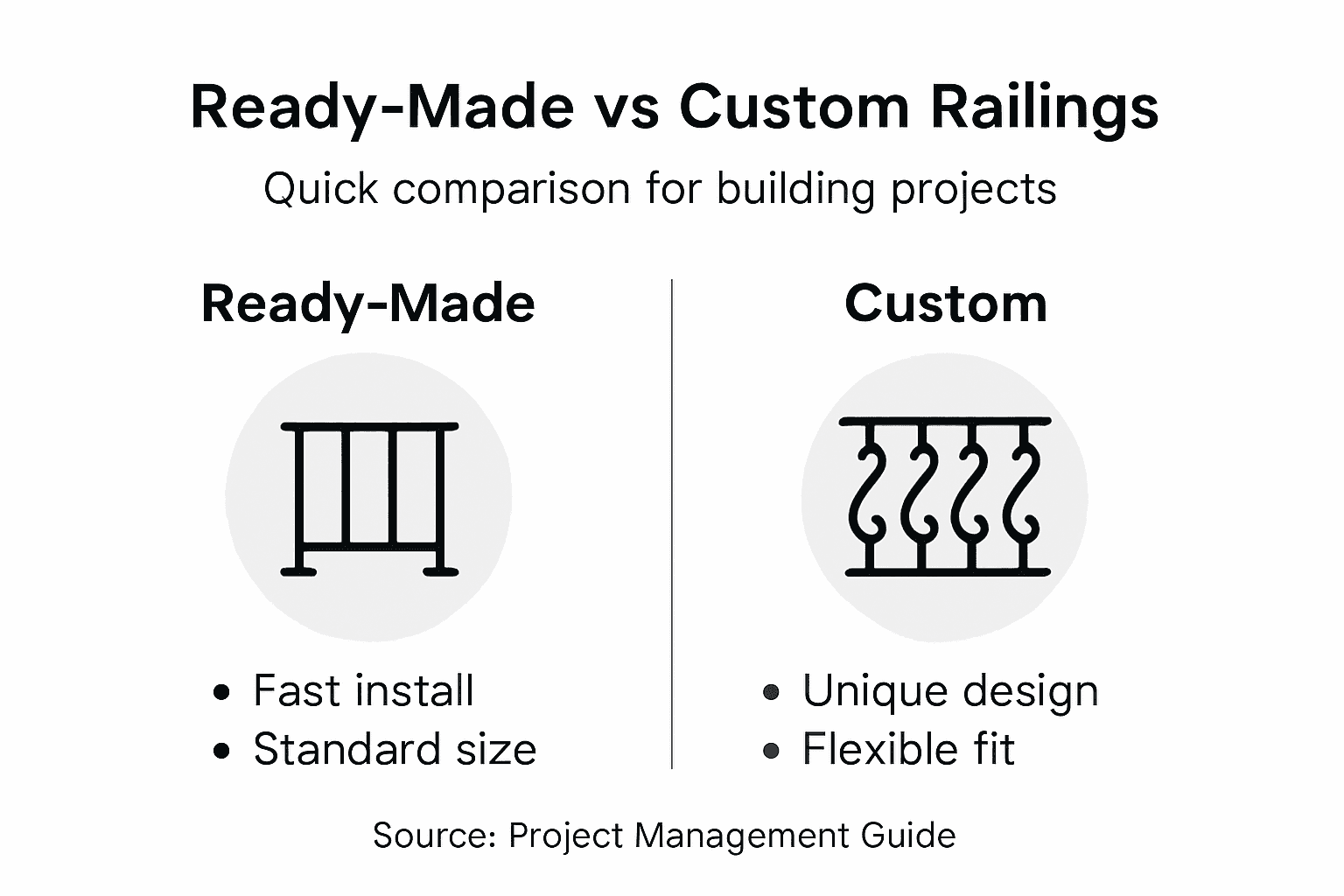
Here’s a concise comparison of ready-made versus custom railings for construction projects:
| Criteria | Ready-Made Railings | Custom Railings |
|---|---|---|
| Design Flexibility | Limited, standard options | Unlimited, tailored solutions |
| Installation Speed | Rapid and predictable | Extended, depends on design |
| Initial Investment | Lower upfront costs | Higher initial cost |
| Project Adaptability | Fits common layouts | Adapts to unique spaces |
| Long-Term Value | Stable but generic | High, matches architectural vision |
Pro tip: Evaluate your project’s specific requirements by comparing installation time, budget constraints, and design complexity before making a final railing selection.
Types of Railings for Modern Construction Projects
Modern construction projects demand versatile railing solutions that balance safety, aesthetics, and performance. Modern railings utilize diverse materials that offer architects and builders unprecedented design flexibility and functional advantages.
Stainless steel railings represent a premier choice for contemporary construction, characterized by their robust attributes:
- Exceptional durability and corrosion resistance
- High strength-to-weight ratio
- Sleek, modern aesthetic appeal
- Minimal maintenance requirements
- Adaptable to both interior and exterior applications
Aluminum railings provide another sophisticated option, particularly for projects demanding lightweight and corrosion-resistant solutions. These railings excel in environments requiring minimal structural intervention while maintaining structural integrity and visual elegance.
Glass railings have emerged as a transformative design element in modern architecture. Their transparent nature allows for:
- Unobstructed views
- Enhanced spatial perception
- Maximum natural light transmission
- Sophisticated, minimalist design aesthetic
- Compatibility with multiple architectural styles
Modern construction professionals must consider material selection based on specific project requirements, including environmental conditions, aesthetic goals, budget constraints, and long-term performance expectations.
The following table summarizes modern railing materials and where they excel in contemporary projects:
| Material | Best Application | Unique Advantage |
|---|---|---|
| Stainless Steel | Commercial, public spaces | Increased durability |
| Aluminum | Lightweight structures | Minimal structural impact |
| Glass | Interior, balconies | Opens up visual spaces |
| Composite | Outdoor environments | Superior environmental resistance |
Pro tip: Consult with a professional engineer to evaluate material compatibility and load-bearing requirements before finalizing your railing selection.
Key Features: Materials, Design, and Durability
Railing performance hinges on a delicate balance between material selection, design innovation, and long-term durability. Architectural railing design demands careful consideration of multiple critical factors that extend far beyond basic structural requirements.
Material selection represents the foundational aspect of railing performance, with each option presenting unique characteristics:
- Stainless Steel: Superior strength and corrosion resistance
- Aluminum: Lightweight and economical
- Glass: Maximum visual transparency
- Composite Materials: Enhanced environmental adaptability
- Hybrid Systems: Combining multiple material advantages
Design considerations play an equally crucial role in determining overall railing effectiveness. Modern architectural approaches emphasize not just structural integrity, but aesthetic integration and functional versatility. Designers must evaluate:
- Load-bearing capacity
- Environmental exposure
- Aesthetic compatibility
- Installation complexity
- Maintenance requirements
Durability emerges as a critical metric, transcending mere material strength to encompass long-term performance under diverse conditions. Professional-grade railings must withstand environmental challenges including temperature fluctuations, moisture exposure, and mechanical stress without compromising structural integrity or visual appeal.
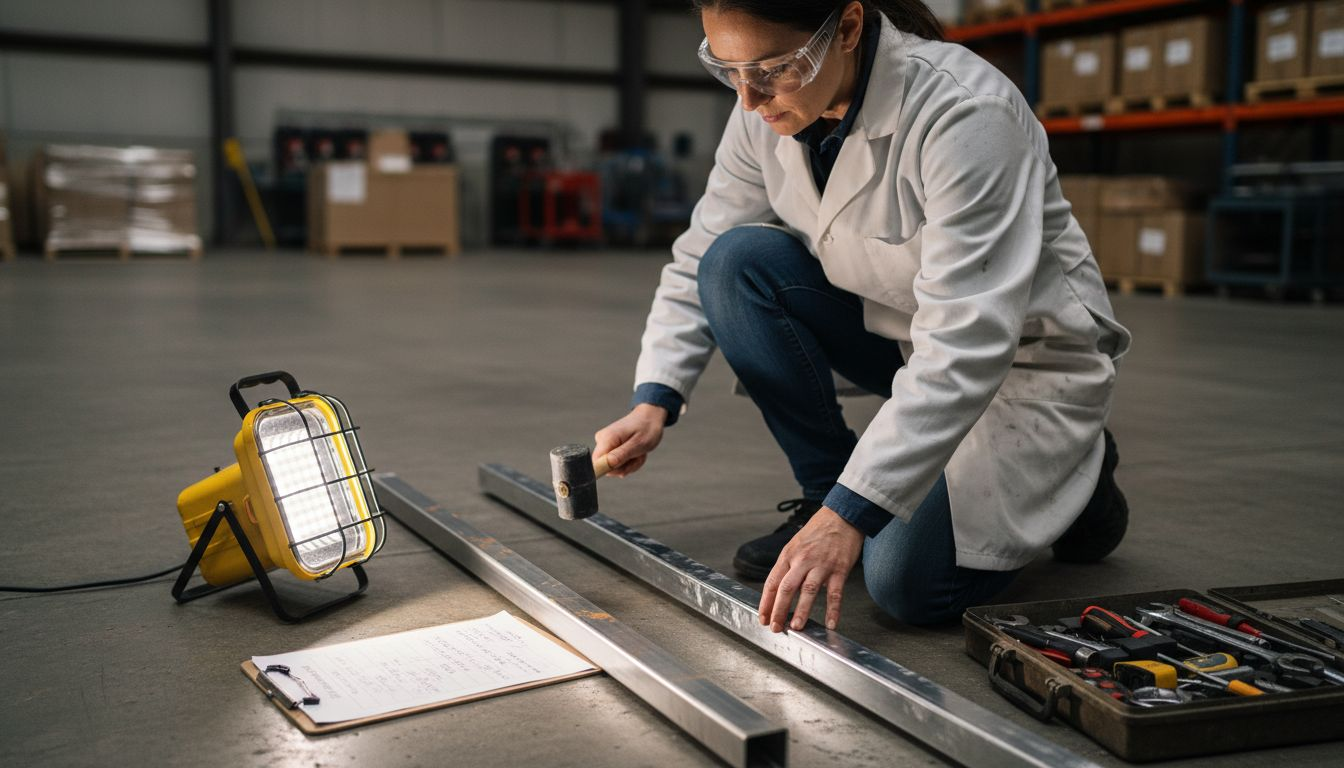
Pro tip: Always conduct comprehensive material stress testing and environmental simulations before finalizing your railing design to ensure optimal long-term performance.
Installation, Lead Time, and Project Fit
Project success in railing implementation depends critically on understanding the nuanced differences between installation processes, lead times, and precise project compatibility. Prefabricated railings offer distinct advantages in streamlining construction timelines and reducing complex installation challenges.
Ready-made railing systems present multiple installation benefits:
- Standardized component dimensions
- Simplified assembly protocols
- Minimal on-site customization requirements
- Reduced labor costs
- Predictable installation timeframes
Custom railing solutions, conversely, demand more sophisticated planning and execution. Their installation process typically involves:
- Detailed site measurements
- Professional design consultations
- Precise fabrication specifications
- Complex mounting configurations
- Extended lead times
Project fit remains a critical consideration that extends beyond simple dimensional compatibility. Architects and builders must evaluate multiple factors including structural requirements, aesthetic integration, environmental conditions, and long-term performance expectations when selecting between prefabricated and custom railing solutions.
Successful railing selection requires balancing immediate project needs with future performance expectations.
Pro tip: Document precise site measurements and structural constraints before selecting between ready-made and custom railing systems to ensure optimal project outcomes.
Cost Breakdown and Long-Term Value
Navigating the complex financial landscape of railing investments requires a comprehensive understanding of both immediate expenses and future performance metrics. Cost analysis in construction projects reveals nuanced considerations beyond initial material and installation expenses.
Upfront cost components for railings typically include:
- Material procurement costs
- Labor installation expenses
- Design and engineering fees
- Site preparation requirements
- Potential structural modification expenses
Long-term value calculation extends far beyond initial investment, encompassing critical performance metrics:
- Maintenance requirements
- Durability and lifespan
- Potential replacement intervals
- Energy efficiency contributions
- Aesthetic depreciation rates
Custom railings often present a higher initial investment but can deliver superior long-term value through precise engineering, material optimization, and tailored performance characteristics. Professional-grade solutions minimize future repair and replacement expenses by addressing specific architectural and environmental challenges.
Intelligent railing selection balances immediate financial constraints with anticipated future performance and maintenance requirements.
Pro tip: Calculate total lifecycle costs, including maintenance and potential replacement, when evaluating railing investment strategies to make financially prudent decisions.
Common Pitfalls and How to Avoid Them
Selecting and installing railings involves numerous potential challenges that can compromise project success, safety, and aesthetic outcomes. Architects and builders must navigate complex decision-making processes to mitigate risks and ensure optimal railing performance.
Common design and specification pitfalls include:
- Improper measurement techniques
- Neglecting structural load requirements
- Overlooking environmental stress factors
- Inadequate material compatibility assessments
- Insufficient safety compliance verification
Installation-related risks demand careful professional attention:
- Incorrect mounting techniques
- Poor anchoring methodology
- Insufficient corrosion protection
- Thermal expansion miscalculations
- Inadequate joint and connection reinforcement
Material selection represents another critical area where professionals frequently encounter challenges. Choosing railings without comprehensive understanding of:
- Performance characteristics
- Long-term durability expectations
- Maintenance requirements
- Environmental interaction potential
- Aesthetic degradation patterns
Professional railing selection requires meticulous attention to technical specifications and holistic performance expectations.
Pro tip: Conduct comprehensive site assessments and consult structural engineering experts before finalizing any railing system to prevent costly future modifications.
Find Your Perfect Balance Between Ready-Made and Custom Railings Today
Choosing the right railing system is critical for every construction and renovation project. Whether you need the speed and cost-effectiveness of standardized components or the tailored design freedom of custom solutions you face important decisions around durability and aesthetics. At Inoxify.bg, we specialize in providing high-quality stainless steel railings that combine long-lasting corrosion resistance with easy installation to meet your exact project needs.
Explore our range of Ready-Made Balusters and French Parapets built with premium AISI 304 and 316 stainless steel. Our products ensure your architecture stands out without compromising safety or durability.
Make your decision with confidence and get exactly what your project demands from material quality to design flexibility. Visit Inoxify.bg now to discover our ready-to-install railing solutions or request custom size options for a seamless building experience. Act now to secure quick delivery and professional support for your next architectural railing project.
Frequently Asked Questions
What are the main differences between ready-made and custom railings?
Ready-made railings feature standardized dimensions and quicker installation times, making them ideal for common architectural layouts. In contrast, custom railings offer tailored solutions that provide design flexibility, unique configurations, and advanced integration with specific architectural visions.
What are the advantages of choosing ready-made railings?
Ready-made railings are advantageous due to their lower initial costs, consistent quality, immediate availability, and faster installation times. They work well for projects with predictable design needs, such as commercial spaces and apartment complexes.
When should I choose custom railings for my project?
Custom railings are best suited for projects requiring unique designs, non-standard dimensions, or specialized materials. They allow for greater aesthetic integration and can accommodate complex structural requirements, which ready-made options may not fulfill.
How do material selections affect railing performance and durability?
Material selection is crucial for railing performance. Stainless steel offers high strength and corrosion resistance, aluminum is lightweight and economical, while glass provides unobstructed views. Each material has unique durability characteristics and maintenance requirements, impacting both long-term performance and aesthetic appeal.