

Why choose stainless steel for exterior railings and parapets
TL;DR:
- Stainless steel resists corrosion through a self-healing oxide layer, reducing long-term maintenance costs.
- Proper material choice and design, especially in coastal areas, are critical for durability.
- Using the correct grade and installation practices ensures the longevity and aesthetic quality of exterior railings.
Most people assume that any metal used outdoors will eventually rust, flake, and fail. That assumption leads to costly cycles of repainting, replacing, and repairing railings and parapets every few years. Stainless steel breaks that pattern entirely. Thanks to a unique self-healing protective layer, it resists corrosion, maintains its appearance, and keeps lifecycle costs lower than almost every alternative. For architects, contractors, and homeowners working on projects in Bulgaria, where coastal salt, wet winters, and summer heat test materials year-round, understanding why stainless steel outperforms the competition is not just useful. It is essential.
Table of Contents
- Understanding stainless steel: The science behind lasting performance
- Comparing stainless steel to other metals for exterior use
- Design and installation tips for maximizing stainless steel durability
- Aesthetic and sustainable advantages for Bulgarian projects
- The surprising truth: Most outdoor metal failures are preventable
- Explore custom stainless solutions for your next project
- Frequently asked questions
Key Takeaways
| Point | Details |
|---|---|
| Self-healing protection | Stainless steel forms a passive layer that repairs itself and prevents corrosion. |
| Superior lifetime value | Its long service life and low maintenance mean lower total costs for exterior projects. |
| Galvanic risk management | Successful installations require separating stainless from other metals and avoiding moisture traps. |
| Sustainable and stylish | Stainless steel supports architectural creativity and contributes to eco-friendly building practices. |
Understanding stainless steel: The science behind lasting performance
Not all metals are created equal, and the difference with stainless steel comes down to chemistry. Stainless steel contains chromium at concentrations between 10.5% and 18%, which reacts with oxygen in the air to form a thin, stable oxide layer on the surface. This passive layer acts as a barrier against moisture, oxygen, and corrosive agents. What makes it extraordinary is that it is self-repairing. If the surface gets scratched or damaged, the oxide layer reforms automatically when exposed to air.
This property, known as passivation, is what separates stainless steel from carbon steel or even galvanized options. Carbon steel simply corrodes when the protective coating is compromised. Stainless steel, by contrast, heals itself continuously, meaning quick drying after rain and adequate aeration both help reduce the risk of any localized attack. Design choices that encourage drainage and air circulation strengthen this protective effect considerably.
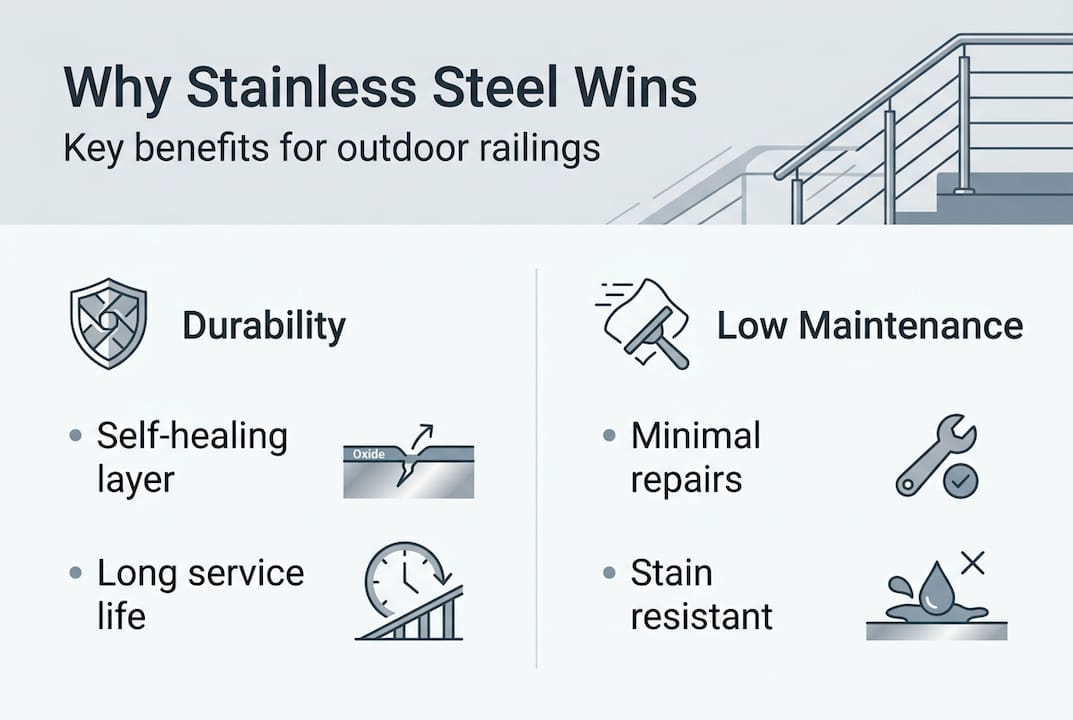
For projects in Bulgaria’s Black Sea coastal areas, or in urban environments with higher pollutant levels, the standard AISI 304 grade may not be sufficient. AISI 316 stainless steel includes molybdenum, an element that significantly strengthens resistance against chloride attack. Chlorides, found in sea spray and road salts, are the primary cause of accelerated corrosion in marine and semi-marine environments. The molybdenum in 316 grade forms a more stable passive layer in these conditions, making it the preferred choice for coastal Bulgarian projects.
Here is what proper material and design selection delivers:
- A self-repairing surface that does not depend on paint or coatings to stay protected
- Grade-specific performance, with AISI 316 offering enhanced chloride resistance for Black Sea or high-humidity applications
- Design compatibility, where proper drainage and crevice-free joints maximize the passive layer’s effectiveness
- Reduced long-term cost, since the material does not require periodic recoating or rust treatment
The durability and design impact of choosing the right grade at the planning stage cannot be overstated. Getting this decision right upfront saves significant expense and effort over the life of the building.
Key insight: The protective layer on stainless steel is not a coating applied from the outside. It is a product of the material’s own chemistry. That distinction changes how you should think about long-term maintenance entirely.
Pro Tip: For any project within 10 kilometers of the Bulgarian Black Sea coastline or areas exposed to road salt in winter, specify AISI 316 corrosion resistance grade as a baseline requirement, not an upgrade.
Comparing stainless steel to other metals for exterior use
Understanding the science is just the start. Here is how stainless stacks up against competing materials in real exterior conditions.
The common alternatives to stainless steel for exterior railings are carbon steel, aluminum, and hot-dip galvanized steel. Each has its place, but none matches stainless for a combination of longevity, low maintenance, and appearance. Empirical data from infrastructure projects confirms that stainless steel can last decades with minimal maintenance, often outperforming carbon steel installations where accelerated atmospheric corrosion forces costly replacement within 10 to 15 years.
| Material | Typical lifespan (exterior) | Maintenance frequency | Corrosion resistance | Relative lifecycle cost |
|---|---|---|---|---|
| Stainless steel (304/316) | 30 to 50+ years | Very low | Excellent | Low |
| Carbon steel (painted) | 10 to 15 years | High (annual painting) | Poor without coating | High |
| Aluminum (anodized) | 20 to 30 years | Moderate | Good | Medium |
| Galvanized steel | 15 to 25 years | Moderate | Moderate | Medium |
Aluminum is lightweight and does resist corrosion reasonably well, but it lacks the structural rigidity of stainless steel and can develop surface oxidation that dulls its appearance over time. It is also harder to weld cleanly, which limits design flexibility for custom railing and parapet systems. Galvanized steel performs better than plain carbon steel but loses its protection once the zinc layer is compromised, and it typically requires recoating within 20 years in exposed environments.
A detailed side-by-side review of steel vs aluminum railings shows that the upfront cost difference between the two materials often disappears over a 15-year window when you factor in painting, re-galvanizing, and replacement costs for the alternatives.
The practical takeaways for your next project:
- Stainless steel’s low maintenance translates to fewer contractor call-backs and lower building management costs
- Lifecycle cost, not purchase price, is the correct metric for comparing exterior materials
- Carbon steel and galvanized options require active intervention to maintain protection; stainless does not
- Aluminum works for lighter applications but falls short on strength and weld quality for complex or high-traffic installations
For a closer look at how these differences play out in Bulgarian exterior conditions, the corrosion resistance results documented from local projects make a strong case for investing in stainless from the start.
Pro Tip: When presenting material options to a client, show the 20-year total cost of ownership, not just the line-item material cost. Stainless steel’s case becomes very clear very quickly.
Design and installation tips for maximizing stainless steel durability
With stainless steel’s advantages clear, let’s focus on maximizing those benefits through proper design and installation.
Even the best-grade stainless steel will underperform if the design or installation ignores basic engineering principles. The most common issues seen in exterior railing projects are not material failures. They are design failures. The good news is that nearly all of them are preventable.
1. Prevent galvanic corrosion at contact points
When stainless steel contacts dissimilar metals, such as carbon steel bolts, aluminum frames, or copper fixtures, galvanic corrosion risk increases sharply. The two metals form an electrochemical cell in the presence of moisture, and the less noble metal corrodes faster while the more noble one is protected. To eliminate this risk, separate the metals using plastic bushes, nylon washers, or non-conductive coatings at every contact point. This is especially critical in coastal or salt-spray environments.
2. Ensure water drainage at every joint and base plate
Crevices where water collects and sits are the primary environment for localized corrosion, even in high-grade stainless. Design base plates, post caps, and horizontal surfaces so that water drains away rather than pooling. A slight angle on horizontal surfaces, drain holes in hollow sections, and well-sealed but vented connections all make a significant difference over time.
3. Avoid deep crevices in structural connections
Bolted connections with narrow gaps between plates or flanges create the perfect conditions for crevice corrosion, where low oxygen levels under the passive layer prevent self-repair. Use full-contact surfaces where possible and fill unavoidable gaps with a suitable non-reactive sealant.
4. Specify the right finish for the environment
A polished mirror finish looks striking but can actually trap deposits in heavily polluted urban air. A brushed or satin finish, while slightly less reflective, is easier to clean and less likely to show early surface staining. In industrial or coastal areas, a brushed No. 4 or 2B finish is often more practical for long-term aesthetics.
5. Use marine-grade stainless for high-exposure conditions
In coastal Bulgarian locations like Varna or Burgas, AISI 316 is the minimum specification. For areas with direct sea spray exposure or high concentrations of de-icing road salt, consider super-duplex grades where the application justifies the investment.
The following table summarizes key installation decisions and their impact on longevity:
| Installation decision | Risk if ignored | Recommended practice |
|---|---|---|
| Metal contact at fasteners | Galvanic corrosion | Plastic bushes or nylon washers |
| Flat base plates without drainage | Crevice corrosion | Slope or add drain holes |
| Tight crevices in bolted joints | Localized oxygen depletion | Seal with non-reactive sealant |
| Grade selection for coastal zones | Accelerated chloride attack | Specify AISI 316 minimum |
| Surface finish selection | Surface contamination buildup | Use brushed or satin finish |
For a practical breakdown of the key railing design features that experienced installers rely on, and for 2026 railing durability tips specific to Bulgaria’s conditions, those resources provide actionable guidance for both new-build and renovation projects. When choosing stainless railings for any exterior application, applying these principles from the design phase forward protects both the investment and the building’s appearance.
Pro Tip: In coastal regions, use marine-grade AISI 316 and specify plastic separation bushes at every metal-to-metal contact point. This single step eliminates the most common source of premature railing failure seen in Black Sea-facing projects.
Aesthetic and sustainable advantages for Bulgarian projects
Durability is foundational, but design and sustainability are increasingly important for Bulgarian projects.
Stainless steel’s visual appeal is one of the reasons architects continue to specify it even when budget-conscious alternatives exist. The material’s clean, modern finish complements both contemporary facades and renovated heritage buildings. It works equally well as a glass parapet frame, a cable railing post system, or a traditional solid balustrade. The finish remains consistent over decades without fading, peeling, or changing color, which is a significant advantage when uniformity across a building’s exterior matters.
From a sustainability perspective, stainless steel’s case is strong. Its exceptionally long lifespan means fewer replacement cycles, which directly reduces the embedded carbon associated with producing and installing new material. At end of life, stainless is fully recyclable, and the recycled material retains its original properties. This circular characteristic aligns with the growing push across Bulgarian construction toward materials that meet environmental standards and reduce overall project waste.
The benefits for architects and homeowners in Bulgaria extend further:
- Consistent visual quality over decades, without the yellowing, chalking, or pitting common in painted metals
- Design flexibility, supporting straight runs, curved parapets, cable infills, and glass panels within the same system
- Recycled content and recyclability support green building certification requirements increasingly specified in Bulgarian commercial tenders
- Reduced embodied energy over time, since avoiding multiple replacement cycles lowers the total environmental footprint of the railing system
- Compatibility with current architectural trends, where clean material palettes and minimal detailing are favored in both residential and commercial facades
“The best exterior material is the one that performs without constant attention. Stainless steel earns that description across a wide range of climates and applications.”
For architects seeking inspiration, railing inspiration ideas shows how stainless fits across diverse project types, from private villas to multi-story commercial buildings. The 2026 railing trends point clearly toward material honesty and longevity as key design drivers, reinforcing stainless steel’s central role in modern Bulgarian architecture. Understanding why architects prefer steel over other materials gets to the core of both aesthetic and environmental reasoning.
The surprising truth: Most outdoor metal failures are preventable
Here is what most articles on exterior railings never say directly: the vast majority of outdoor metal failures are not caused by bad materials. They are caused by bad decisions. Poor material specification, installation shortcuts, and a focus on the lowest upfront cost consistently produce the same results: rust stains on building facades, loose posts, corroded bases, and expensive emergency repairs within a decade of installation.
The uncomfortable reality is that choosing carbon steel with a painted finish to save money on a balcony railing typically costs more over a ten-year period than specifying stainless steel from the start. That calculation becomes even more one-sided when you include the cost of scaffolding access to reach upper-story railings for repainting or replacement.
What experienced installers and architects know, and what less experienced specifiers often learn the hard way, is that the three most common sources of premature failure are all avoidable. First, using the wrong grade of stainless for the environment. Second, ignoring galvanic corrosion at mixed-metal connection points. Third, designing base plates and joints that trap water instead of shedding it. None of these require expensive solutions. They require informed decisions made at the right time in the project process.
The pattern we see repeatedly is that clients who focus on the full lifecycle value of their railing investment, rather than the line-item material cost, almost always end up with better outcomes and fewer regrets. A resource like the how to select railings guide is exactly the kind of reference that helps professionals and homeowners alike make those decisions confidently.
The most important shift is moving from “what is the cheapest option that meets the spec?” to “what is the most reliable option that performs over the life of the building?” For exterior railings and parapets in Bulgaria, that answer is consistently stainless steel, specified and installed correctly.
Explore custom stainless solutions for your next project
If you are planning an exterior railing or parapet installation in Bulgaria, whether for a new residential build, a commercial renovation, or a public-facing structure, Inoxify.bg offers a full range of locally produced stainless steel systems designed for exactly these conditions.
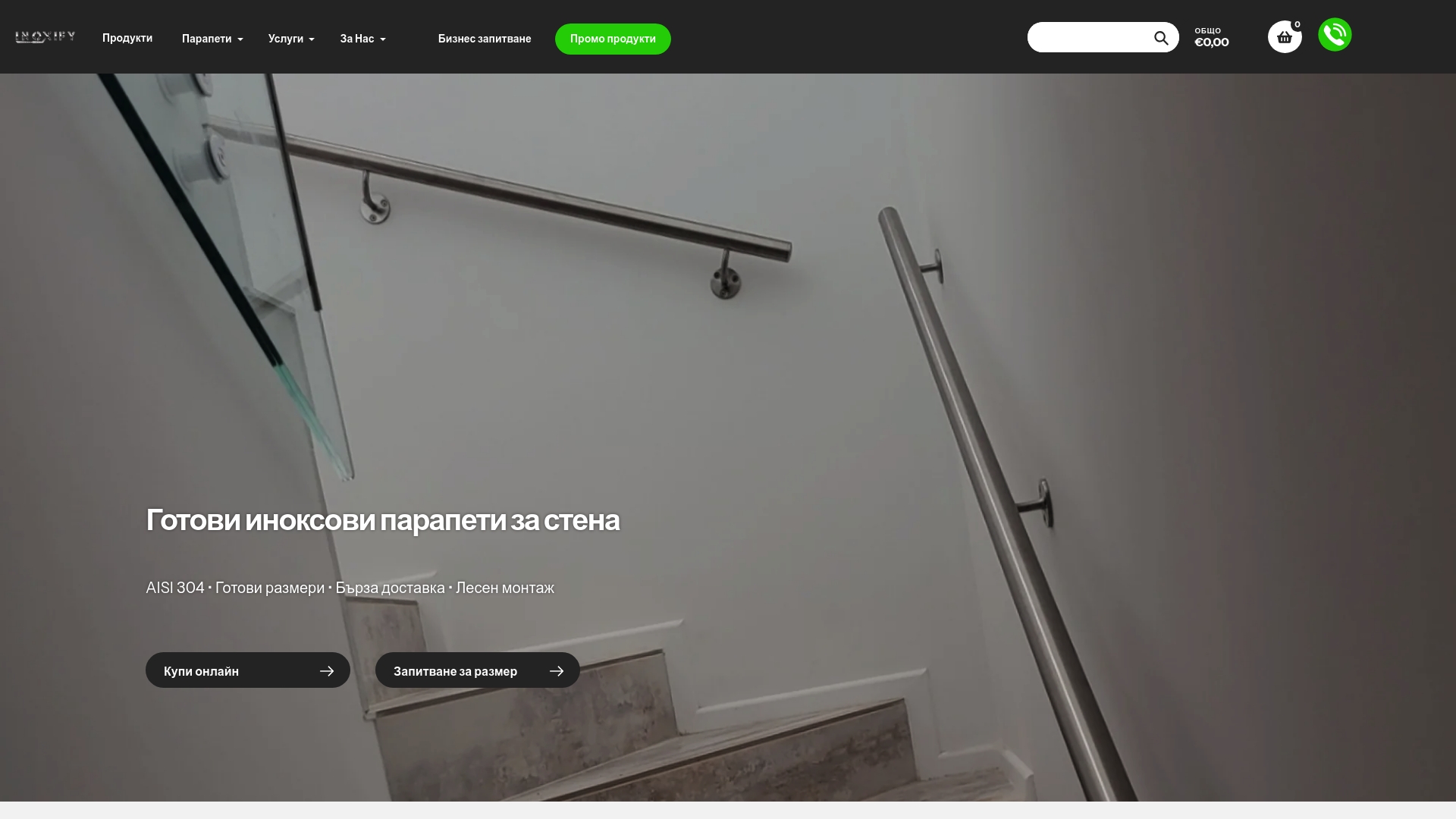
From custom parapet solutions engineered for both safety and visual impact, to rounded system designs suited to contemporary architectural details, every product is manufactured in Bulgaria with AISI 304 and 316 stainless steel. Quick delivery, ready-to-install configurations, and clear installation guidance make the process straightforward for contractors and accessible for homeowners. Visit Inoxify.bg to explore the full product range, request custom sizing, and get expert guidance for your specific project requirements.
Frequently asked questions
Why is stainless steel better than carbon steel for exterior railings?
Stainless steel outperforms carbon steel by resisting atmospheric corrosion without coatings, requiring minimal maintenance, and delivering a significantly longer service life with lower overall lifecycle costs.
What grade of stainless steel is best for Bulgaria’s climate?
AISI 316 with molybdenum for chloride resistance is the ideal choice for Bulgaria, particularly in coastal areas near the Black Sea where salt and humidity levels are elevated.
How can I prevent corrosion between stainless and other metals?
Use plastic bushes or washers to separate stainless steel from dissimilar metals at every fastening or contact point, and ensure connections are designed to drain water rather than hold it.
Does stainless steel require maintenance for exterior use?
Maintenance needs are minimal because the self-repairing oxide layer continuously protects the surface; routine cleaning and well-designed drainage are sufficient to maintain appearance and performance over the full service life.
Recommended
- Stainless Steel Exterior Railings Bulgaria: 200% Better Corrosion – Inoxify
- How to Choose Stainless Steel Railings for Projects – Inoxify
- 7 Key Railings for Exterior Projects List for Durability – Inoxify
- 7 Architectural Railing Inspiration Ideas for Designers – Inoxify
Свързани страници в Inoxify
Разгледайте нашите специализирани секции за оферти, цени с монтаж и техническа информация: