

Why Choose Ready-Made Railings: Cut Install Time 40% in 2026
Ready-made stainless steel railings have become the go-to solution for Bulgarian architects and contractors seeking project efficiency without compromising quality. These prefabricated systems deliver immediate benefits: installation time reductions of up to 40%, predictable costs, and guaranteed compliance with European safety standards. By leveraging advanced manufacturing techniques and premium stainless steel grades like AISI 304 and 316, ready-made railings meet the demands of modern residential and commercial construction projects across Bulgaria.
Table of Contents
- Material Durability And Corrosion Resistance
- Time And Cost Efficiency Benefits
- Compliance With Safety And Construction Standards
- Customization And Design Flexibility
- Local Manufacturing Advantages In Bulgaria
- Common Misconceptions About Ready-Made Railing Solutions
- Conclusion And Practical Recommendations
- Explore Expert Ready-Made Railing Solutions At Inoxify.bg
Key Takeaways
| Point | Details |
|---|---|
| Installation Speed | Ready-made railings reduce on-site installation time by up to 40% compared to custom fabrication. |
| Material Quality | AISI 304 and 316 stainless steel grades provide over 25 years of maintenance-free service. |
| Regulatory Compliance | Pre-certified products meeting EN 1991-1-1 and EN 1991-1-7 standards streamline project approvals. |
| Customization Options | Modular designs offer extensive finish and configuration choices within efficient production timelines. |
| Local Advantages | Bulgarian manufacturers deliver within 14 days versus 4-8 week import lead times. |
Material Durability and Corrosion Resistance
Stainless steel remains the gold standard for railing applications because of its exceptional longevity and minimal maintenance requirements. The two primary grades used in ready-made railings serve distinct purposes based on environmental exposure.
AISI 304 stainless steel contains 18% chromium and 8% nickel, providing excellent corrosion resistance for most interior and moderate exterior applications. AISI 316 adds 2-3% molybdenum, dramatically enhancing resistance to chloride-induced corrosion in coastal or industrial environments. This upgrade proves essential for projects near the Black Sea coast or in areas with high atmospheric pollutants.
Material Performance Comparison:
| Grade | Environment | Expected Lifespan | Maintenance |
|---|---|---|---|
| AISI 304 | Interior, urban exterior | 25+ years | Minimal |
| AISI 316 | Coastal, industrial, high humidity | 30+ years | Very low |
Properly specified stainless steel railings eliminate the recurring costs associated with painting, rust treatment, and premature replacement. The initial material investment pays dividends through decades of reliable performance. For architects specifying materials, understanding site conditions determines optimal grade selection.
Critical factors influencing material choice:
- Distance from saltwater sources (coastal proximity)
- Industrial pollution levels in the project area
- Interior versus exterior installation locations
- Budget constraints balanced against lifecycle costs
- Local climate patterns including humidity and temperature extremes
European standards provide clear guidance on material selection based on corrosion category classifications. Following these recommendations ensures railings perform as expected throughout their service life.
Pro Tip: Always request material certificates from suppliers confirming exact steel grade composition. Verifying AISI 304 or 316 designation prevents future performance issues.
Time and Cost Efficiency Benefits
Project timelines drive profitability in construction. Ready-made railing systems transform scheduling by eliminating fabrication delays and reducing on-site labor requirements.
Traditional custom railing fabrication involves measuring, designing, manufacturing, and multiple site visits for fitting adjustments. This process typically spans 4-8 weeks before installation begins. Ready-made systems cut this timeline dramatically, with products arriving on-site ready for immediate installation.
Quantifiable efficiency gains include:
- 40% reduction in installation time versus custom fabrication
- 25-30% decrease in total labor costs through simplified assembly
- 15% less material waste from pre-engineered components
- Elimination of on-site welding and finishing requirements
- Predictable scheduling with fixed delivery dates
Cost savings extend beyond direct labor reductions. Prefabricated railings minimize rework incidents because components arrive precisely manufactured to specification. Contractors avoid the expense of correcting measurement errors or design modifications that plague custom projects.
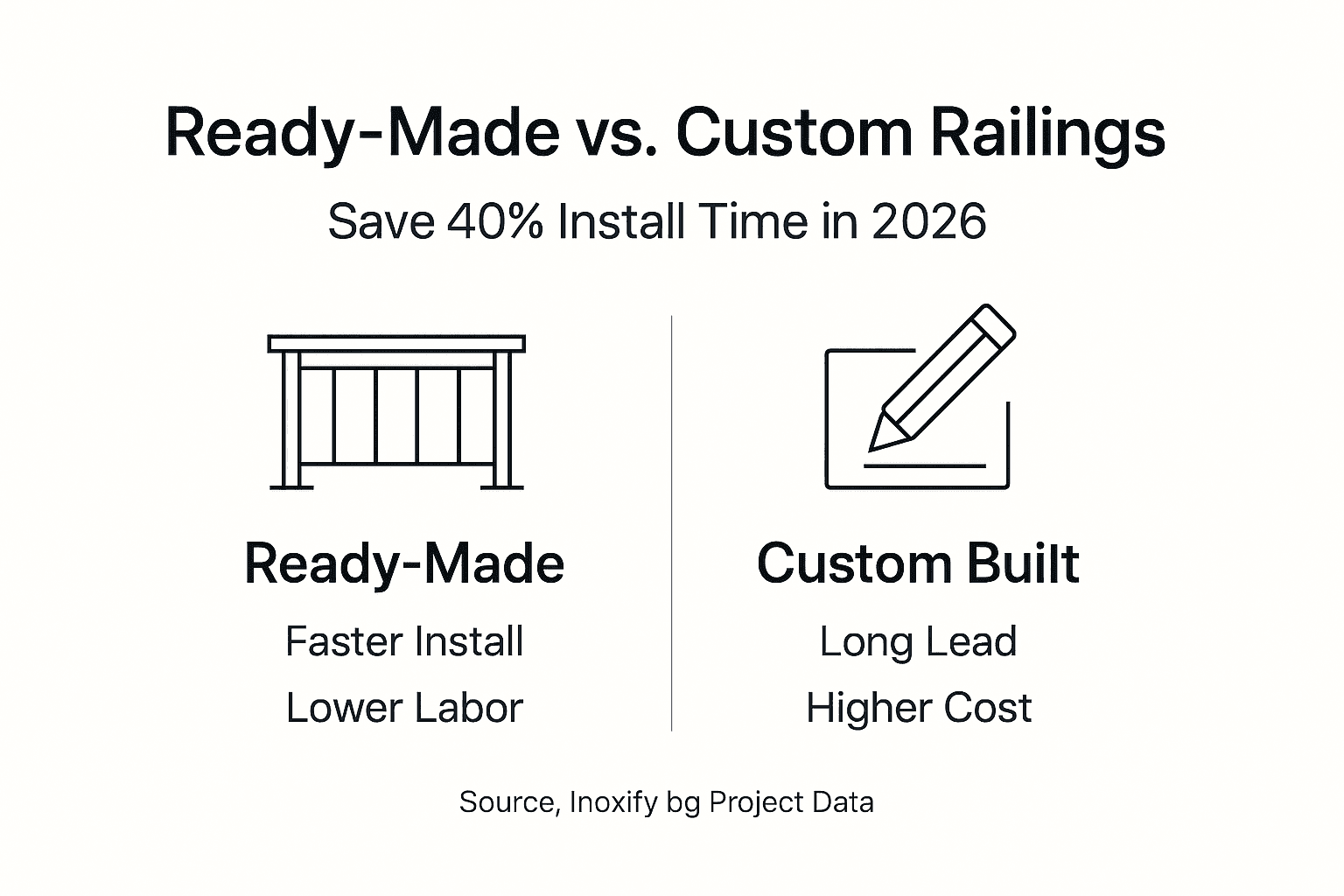
The financial impact compounds across multiple projects. A contractor completing ten installations annually saves approximately 200-300 labor hours by switching to ready-made systems. This freed capacity allows taking on additional projects or reducing overhead costs.
Scheduling predictability represents another hidden benefit. Custom fabrication delays ripple through project timelines, pushing back subsequent trades and potentially triggering penalty clauses. Ready-made railings arrive on predetermined dates, keeping projects on track.
Pro Tip: Calculate total project cost including labor, materials, timeline risk, and opportunity cost. Ready-made railings often deliver 20-25% overall savings despite potentially higher per-unit material costs.
Compliance with Safety and Construction Standards
Regulatory approval determines project viability. Ready-made railing manufacturers design products specifically to meet European and Bulgarian safety requirements, removing compliance uncertainty.
EN 1991-1-1 establishes load requirements for building structures, while EN 1991-1-7 addresses accidental actions. These standards define minimum strength requirements, load distribution calculations, and safety factors that railings must satisfy. Pre-certified products arrive with documentation proving compliance, expediting building authority approvals.
CE marking indicates conformity with EU safety, health, and environmental protection standards. This certification requires manufacturers to maintain rigorous quality control and testing protocols. Products bearing CE marks have undergone evaluation confirming they meet all applicable directives.
Key compliance advantages:
- Pre-tested load capacities eliminate on-site structural calculations
- Documented certifications streamline building permit applications
- Third-party verification provides liability protection for contractors
- Consistent quality across product batches ensures predictable performance
- Simplified inspection processes with readily available compliance documentation
Building inspectors appreciate certified products because they reduce approval time and documentation requirements. Instead of evaluating custom designs, inspectors verify that installed systems match certified specifications. This process typically saves 1-2 weeks in the approval cycle.
Safety loads for residential railings typically require 0.5 kN/m horizontal force resistance, while commercial applications demand 1.0-1.5 kN/m. Ready-made systems specify exact load ratings, ensuring appropriate selection for each application type.
Regulatory compliance extends to installation instructions. Manufacturers provide detailed mounting specifications that satisfy building code requirements when followed correctly. This documentation proves invaluable during final inspections.
Customization and Design Flexibility
The misconception that ready-made equals rigid design limits has prevented many architects from exploring prefabricated railing options. Modern modular systems offer surprising versatility within efficient production frameworks.
Modular design philosophy centers on standardized components that combine in various configurations. Base posts, infill panels, handrails, and mounting hardware exist as discrete elements assembled to project-specific requirements. This approach maintains manufacturing efficiency while enabling design variation.
Available customization options include:
- Multiple finish choices (brushed, polished, powder-coated)
- Varied infill types (cable, glass, vertical bars, mesh)
- Adjustable section lengths within modular increments
- Multiple mounting configurations (surface, side, core)
- Mix-and-match component combinations for unique aesthetics
- Custom color matching for powder-coated finishes
Over 70% of modern modular railing products now offer configuration options that satisfy most architectural requirements. The key lies in understanding modular design principles and working within system parameters during the specification phase.
Design flexibility comparison:
| Feature | Custom Fabrication | Ready-Made Modular |
|---|---|---|
| Finish Options | Unlimited | 8-12 standard choices |
| Lead Time | 6-10 weeks | 1-3 weeks |
| Design Iterations | Multiple revisions | Single specification |
| Cost Predictability | Variable | Fixed pricing |
| Installation Complexity | High | Low to moderate |
Architects should specify modular railings early in the design process, selecting systems that align with overall aesthetic vision. Most suppliers provide CAD libraries and design assistance to integrate products seamlessly into building plans.
The practical reality involves trade-offs. While fully custom railings accommodate any design concept, they introduce timeline and cost variables that many projects cannot absorb. Modular systems constrain certain design elements while delivering predictability that keeps projects on schedule and budget.
Pro Tip: Request sample assemblies before finalizing specifications. Physical evaluation reveals finish quality and assembly details that drawings cannot convey.
Local Manufacturing Advantages in Bulgaria
Sourcing construction materials locally provides strategic advantages beyond simple cost considerations. Bulgarian ready-made railing manufacturers offer benefits that imported products cannot match.
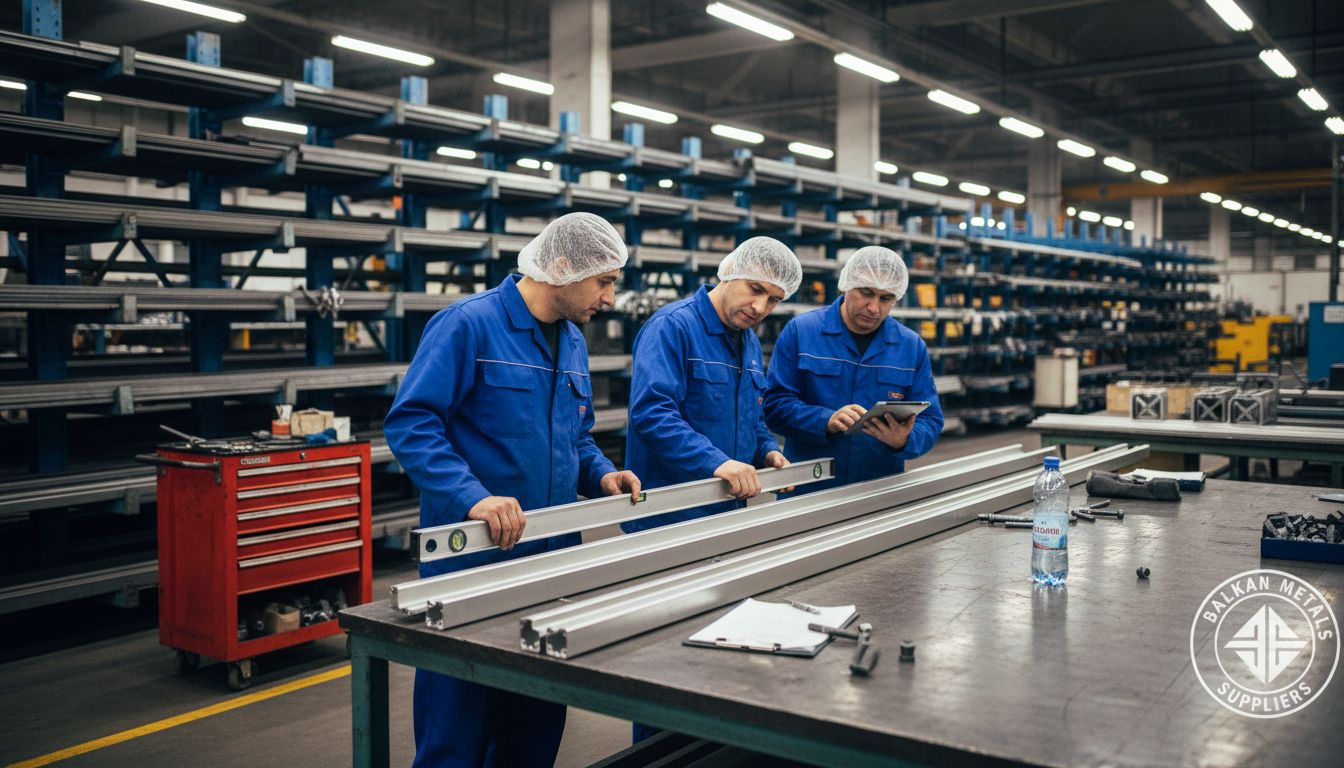
Delivery timelines illustrate the most obvious advantage. Local manufacturers typically deliver within 14 days, while imported railings require 4-8 weeks for production and shipping. This three-to-fourfold time difference impacts project scheduling significantly.
Quality control becomes more manageable with local suppliers. Contractors can visit manufacturing facilities, inspect production processes, and verify material grades before ordering. This transparency builds confidence and reduces product defect risks. International suppliers operate remotely, making quality verification difficult and returns prohibitively expensive.
Local sourcing advantages:
- Rapid delivery schedules support tight project timelines
- Direct communication with manufacturers in Bulgarian language
- Easier warranty claim processing and product support
- Reduced shipping damage risks from shorter transport distances
- Supporting local economy and building long-term supplier relationships
- Alignment with Bulgarian building codes and market standards
- Lower carbon footprint from reduced transportation distances
Customer support quality differs dramatically between local and international suppliers. Bulgarian manufacturers understand local construction practices, building codes, and installation challenges. They provide relevant guidance and troubleshooting assistance when issues arise on-site.
Economic considerations extend beyond individual projects. Choosing local suppliers strengthens regional manufacturing capacity and maintains skilled employment. These broader impacts contribute to industry sustainability and ensure supplier availability for future projects.
Logistics reliability improves with shorter supply chains. International shipping involves customs delays, documentation errors, and transport damage risks that local delivery avoids. Contractors eliminate these variables by sourcing domestically.
Local manufacturers also adapt products to Bulgarian market needs more readily than international suppliers focused on broader European markets. This responsiveness results in products better suited to local architectural styles and installation practices.
Common Misconceptions About Ready-Made Railing Solutions
Several persistent myths discourage architects and contractors from considering ready-made railings. Examining these misconceptions reveals how outdated assumptions limit beneficial options.
Myth 1: Ready-made railings restrict design creativity
Reality: Modern modular systems provide extensive configuration options that satisfy most architectural requirements. The limitation lies not in the products but in understanding how to specify within modular frameworks. Designers who master these systems discover creative freedom within efficient production parameters.
Myth 2: Prefabricated railings compromise structural durability
Reality: Factory-controlled manufacturing produces more consistent quality than on-site fabrication. Automated welding, precision cutting, and quality testing ensure each component meets specifications. Field fabrication introduces variables that reduce reliability.
Myth 3: Ready-made solutions increase project costs
Reality: Total project costs decrease by 15-25% when accounting for reduced labor, eliminated rework, less waste, and faster timelines. While per-unit material costs may exceed basic custom materials, the complete financial picture favors prefabricated systems.
Myth 4: Custom railings provide better value for complex projects
Reality: Complex projects benefit most from prefabricated components because they reduce on-site coordination challenges. Breaking complex designs into modular sections simplifies installation and improves quality control.
Additional misconceptions to address:
- Ready-made railings suit only simple, straight runs (reality: corner systems and curved sections exist)
- Local suppliers cannot match import quality (reality: Bulgarian manufacturers use identical materials and modern equipment)
- Prefabricated means generic appearance (reality: finish and infill options create distinctive looks)
- Installation requires specialized tools (reality: basic equipment suffices for most systems)
Viewing ready-made railings as strategic tools rather than compromises transforms project planning. These systems solve specific problems around timeline, cost, and quality predictability. Projects that prioritize these factors benefit from prefabricated solutions.
Conclusion and Practical Recommendations
Successful ready-made railing implementation requires systematic evaluation of project requirements matched against product capabilities. Following a structured selection process ensures optimal outcomes.
Decision framework for specifying ready-made railings:
- Assess environmental conditions to determine appropriate stainless steel grade (AISI 304 for standard applications, 316 for coastal or industrial sites)
- Verify compliance documentation including CE marking and EN standard certifications before ordering
- Evaluate customization needs against available modular options, prioritizing must-have versus nice-to-have features
- Compare local supplier offerings on delivery timelines, quality guarantees, and post-installation support
- Calculate total project cost including materials, labor, timeline impacts, and risk factors
- Request product samples and review installation instructions before finalizing large orders
- Confirm mounting compatibility with existing structural conditions and architectural details
- Plan installation scheduling around confirmed delivery dates to optimize labor efficiency
Partner with established Bulgarian suppliers like Inoxify.bg that demonstrate manufacturing expertise, maintain material quality standards, and provide comprehensive project support. Strong supplier relationships deliver value beyond individual transactions through reliable performance and responsive service.
Maintenance planning should begin during specification. While stainless steel requires minimal upkeep, establishing periodic inspection and cleaning protocols extends service life and maintains appearance. Document these requirements in project handover materials.
The construction industry continues evolving toward efficiency and predictability. Ready-made railing systems exemplify this trend by delivering professional results within controlled parameters. Projects that embrace these solutions gain competitive advantages in timeline, cost, and quality consistency.
Explore Expert Ready-Made Railing Solutions at Inoxify.bg
Transform your 2026 construction projects with professionally engineered stainless steel railings that combine efficiency with uncompromising quality. Inoxify.bg specializes in ready-made railing systems designed specifically for Bulgarian architectural and contractor needs.
Our locally manufactured products meet all EN safety standards while delivering the customization flexibility modern projects demand. Whether you need guidance on choosing the right stainless steel grade, understanding durability factors and design options, or learning about efficiency benefits, our team provides expert support throughout your project. Experience the advantages of working with a trusted local supplier committed to your success.
Frequently Asked Questions
What makes AISI 316 stainless steel more corrosion-resistant than AISI 304?
AISI 316 contains 2-3% molybdenum that dramatically improves resistance to chloride-induced corrosion, making it essential for coastal or industrial environments. This addition protects against pitting and crevice corrosion that degrades AISI 304 in harsh conditions.
How do ready-made railings ensure compliance with Bulgarian building codes?
Manufacturers design products to meet EN 1991-1-1 and EN 1991-1-7 European standards that Bulgaria recognizes. CE marking confirms third-party verification of compliance, and detailed documentation supports building permit applications.
Can modular railing systems accommodate non-standard dimensions?
Modern modular systems offer adjustable components within incremental ranges that fit most architectural requirements. Manufacturers provide custom sizing for unique situations while maintaining production efficiency and reasonable lead times.
What delivery timeline should contractors expect for ready-made railings in Bulgaria?
Local Bulgarian manufacturers typically deliver within 14 days of order confirmation. This timeline assumes standard configurations and finishes, with custom specifications potentially adding 1-2 weeks to production schedules.
Do ready-made railings require special tools for installation?
Most systems install using standard construction tools including drills, levels, and basic hand tools. Manufacturers provide detailed instructions specifying required equipment, and specialized tools are rarely necessary for proper installation.
How do lifecycle costs compare between ready-made and custom railings?
Ready-made stainless steel railings deliver lower total ownership costs through reduced maintenance, longer service life, and predictable performance. Initial savings from faster installation compound with decades of minimal upkeep requirements compared to alternatives.