

What is an interior railing system? A 2026 guide
Many architects and contractors believe stainless steel interior railings are complex to install and expensive to maintain. Modern modular systems challenge this misconception by simplifying assembly and cutting labor costs by up to 40%. This guide clarifies material choices, safety compliance, and installation practices tailored specifically for Bulgarian projects, helping you deliver safe, stylish solutions efficiently.
Table of Contents
- Introduction To Interior Railing Systems
- Material Specifications: Stainless Steel Grades For Railings
- Design And Aesthetic Options For Interior Railing Systems
- Safety Standards And Compliance For Interior Railings
- Installation And Customization Practices For Bulgarian Projects
- Common Misconceptions And Installation Realities
- Explore Inoxify’s Stainless Steel Railing Solutions For Your Projects
- Frequently Asked Questions
Key takeaways
| Point | Details |
|---|---|
| Safety and aesthetics | Interior railing systems protect against falls while enhancing modern architectural design. |
| Material superiority | AISI 316 stainless steel provides superior corrosion resistance in humid or coastal Bulgarian environments. |
| Design flexibility | Glass parapets and cable railings offer minimalist aesthetics without compromising safety standards. |
| Code compliance | Bulgarian building codes mandate specific railing heights and baluster spacing for user protection. |
| Installation efficiency | Modular stainless steel kits reduce installation time and labor costs by up to 40%. |
Introduction to interior railing systems
An interior railing system includes posts, handrails, balusters, and infill panels that form safety barriers inside buildings. These systems serve two primary functions: protecting occupants from falls and visually enhancing interior architecture. Understanding the railings’ role in building design helps you balance safety with aesthetic goals.
Every interior railing system comprises essential components working together:
- Vertical posts anchored to floors or walls provide structural support
- Continuous handrails offer grip and guidance for users
- Balusters support handrails and prevent falls through openings
- Infill panels or cables fill spaces between posts and rails
Modern construction projects demand seamless integration of safety with design. Interior railing systems provide essential safety support while enhancing architectural style and interior ambiance, making material and design choices critical from project inception. Architects must consider both functional requirements and visual impact when specifying railing systems for commercial or residential spaces.
Material specifications: stainless steel grades for railings
Choosing between AISI 304 and AISI 316 stainless steel significantly impacts railing durability and maintenance requirements. AISI 316 stainless steel contains molybdenum, providing superior corrosion resistance especially in chloride-rich environments unlike AISI 304. This distinction matters particularly for Bulgarian projects in humid regions or near the Black Sea coast.
| Feature | AISI 304 | AISI 316 |
|---|---|---|
| Chromium content | 18% | 16-18% |
| Nickel content | 8-10% | 10-14% |
| Molybdenum | None | 2-3% |
| Corrosion resistance | Good for standard interiors | Superior in humid/coastal areas |
| Cost | More affordable | 15-20% higher |
| Best applications | Standard interior spaces | Humid environments, coastal projects |
The importance of stainless steel grades extends beyond initial installation to lifecycle costs. AISI 316 requires less maintenance and withstands environmental challenges better, reducing long-term ownership expenses. For projects in Sofia or inland cities with controlled climates, AISI 304 delivers adequate performance at lower cost.
Material selection directly affects the durability impact of railing materials over decades of use. Consider environmental exposure, budget constraints, and maintenance capabilities when specifying grades. Pro Tip: For bathroom or pool area railings where moisture is constant, always specify AISI 316 to prevent premature corrosion and costly replacements.
Design and aesthetic options for interior railing systems
Tempered glass panels create unobstructed views while allowing natural light to flow through spaces. Glass railings with tempered panels meet or exceed safety codes while enhancing aesthetic appeal and spatial openness, making them popular for modern Bulgarian residential and commercial projects. The transparency maintains visual connections between levels without compromising safety.
Cable railing systems offer minimalist aesthetics favored in contemporary architecture:
- Thin horizontal cables provide safety with minimal visual obstruction
- Stainless steel cables resist corrosion and maintain tension over time
- Hidden hardware creates clean lines emphasizing architectural simplicity
- Flexibility in spacing accommodates various design preferences
The modern railing design impact extends beyond aesthetics to functional benefits. Combining stainless steel posts with glass or cable infills creates versatile systems adaptable to diverse architectural styles. This approach satisfies both structural requirements and design ambitions for spaces ranging from corporate lobbies to private residences.
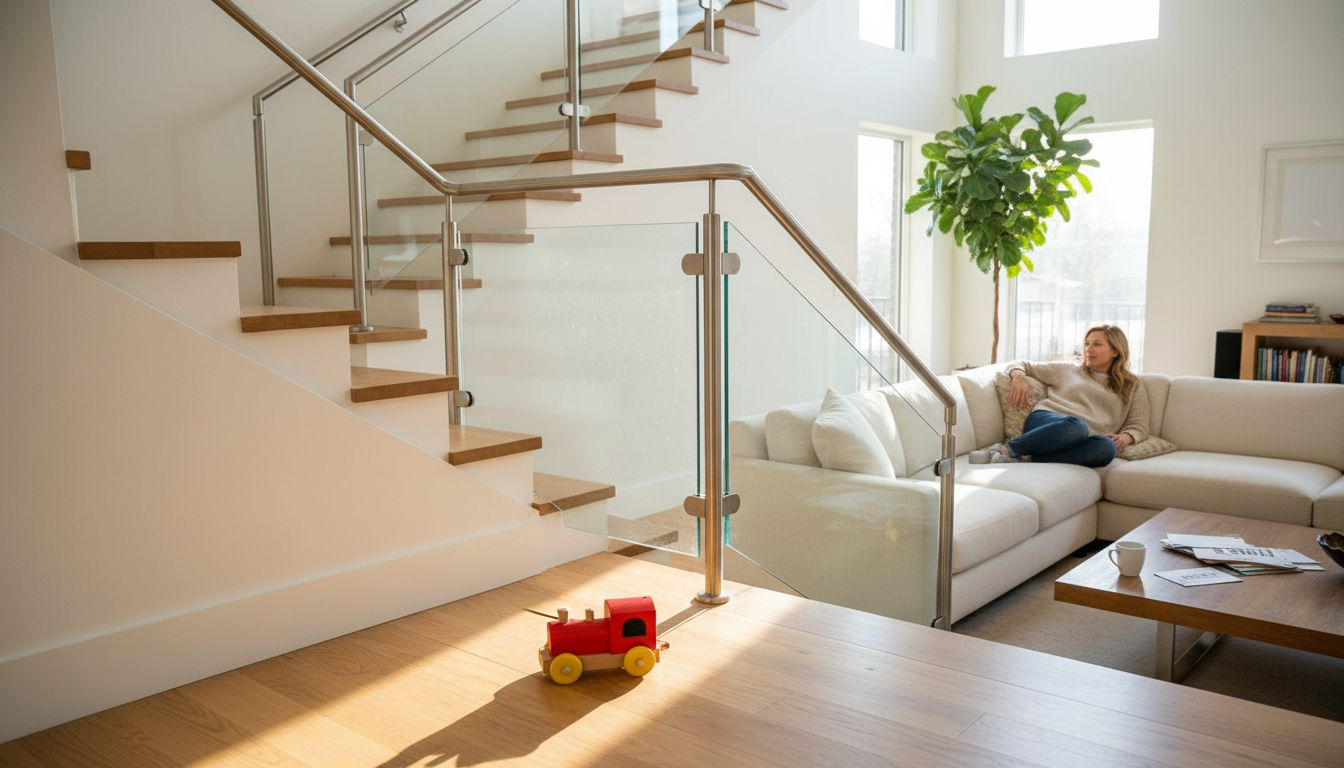
Pro Tip: Specify low-iron tempered glass for railings to eliminate the greenish tint standard glass exhibits, ensuring crystal-clear transparency that showcases your architectural vision without color distortion.
Safety standards and compliance for interior railings
Bulgarian building codes require specific railing height and baluster spacing to prevent falls and injuries, making compliance essential for all interior projects. Understanding these requirements prevents costly redesigns and ensures occupant protection. Architects bear responsibility for specifying systems that meet or exceed minimum safety thresholds.
Key safety requirements for interior railings include:
- Minimum railing height of 90-100 cm for residential buildings
- Commercial buildings typically require 107 cm minimum height
- Maximum baluster spacing of 10 cm to prevent child falls
- Load resistance of 0.75-1.5 kN/m depending on building type
- Handrails must support 90 kg point load without failure
The railing safety and compliance considerations differ between interior and exterior applications. Interior systems face less environmental stress but must accommodate higher user traffic in commercial settings. Special attention to accessibility ensures elderly and mobility-impaired users navigate spaces safely with appropriate handrail diameter and mounting height.
Load testing validates that installed systems withstand design stresses and usage patterns. Specify third-party testing for critical applications like shopping centers or public buildings where liability concerns demand documented performance.
Installation and customization practices for Bulgarian projects
Modular stainless steel railing kits simplify installation and can reduce labor costs by up to 40% compared to custom-fabricated systems. These pre-engineered solutions arrive ready for assembly, eliminating complex fabrication work on site. Bulgarian contractors benefit from predictable installation timelines and reduced skilled labor requirements.
Common installation methods each suit specific project conditions:
| Installation Type | Advantages | Disadvantages | Best Applications |
|---|---|---|---|
| Wall-mounted | Clean look, space-efficient | Requires solid wall structure | Stairways, corridors |
| Post-mounted | Versatile, strong | More visible hardware | Open floor edges, balconies |
| Glass parapet | Unobstructed views | Higher material cost | Modern offices, atriums |
| Cable system | Minimal visual impact | Requires precise tensioning | Contemporary residences |
Following stainless railing installation best practices ensures structural integrity and longevity:
- Verify substrate strength and anchor spacing requirements
- Use laser levels to ensure consistent handrail height
- Pre-drill all connection points to prevent material stress
- Install temporary supports during assembly for alignment
- Apply thread-locking compound to prevent hardware loosening
- Conduct load testing before final acceptance
The easy railing installation features of modular systems include adjustable components accommodating slight dimensional variations. This flexibility proves valuable in renovation projects where existing structures may not align perfectly. Understanding how to choose stainless steel railings involves balancing installation complexity with design requirements.
Pro Tip: Order modular railing kits 10% longer than measured dimensions to accommodate field adjustments, then trim to exact length during installation for perfect fits without delays waiting for replacements.
Common misconceptions and installation realities
Many believe stainless steel railings are difficult and expensive to install, but modular stainless steel railing kits can reduce installation labor costs by up to 40%, contrary to beliefs about high costs and difficulty. Modern engineering has transformed railing installation from complex fabrication to straightforward assembly using pre-manufactured components.
Key myths corrected with evidence:
- Myth: All stainless steel grades perform equally in corrosion resistance
- Reality: AISI 316 significantly outperforms AISI 304 in humid or chloride-rich environments due to molybdenum content
- Myth: Glass railings serve only decorative purposes with limited safety
- Reality: Properly installed tempered glass railings meet all safety codes and provide superior fall protection
- Myth: Custom architectural designs cannot accommodate modular railing systems
- Reality: Modern modular systems offer extensive customization through adjustable components and multiple finish options
The ready-made railing installation benefits extend beyond cost savings to project schedule predictability. Contractors can confidently commit to completion dates knowing materials arrive ready for assembly. Understanding the advantages of ready-made railings helps architects specify systems that balance design intent with practical installation constraints.
These misconceptions often stem from outdated experiences with fully custom fabrication. Modern modular systems deliver both efficiency and design quality, making them suitable for demanding architectural applications.
Explore Inoxify’s stainless steel railing solutions for your projects
Inoxify delivers modular and custom stainless steel railing systems engineered specifically for Bulgarian architectural projects. Our products combine corrosion resistance, modern aesthetics, and safety compliance to simplify your specifications while exceeding client expectations.
Save time and reduce installation labor by leveraging our ready-made railings that cut installation time by 40% compared to traditional fabrication. Whether you need glass parapets for contemporary offices or cable systems for residential projects, our expert team supports you through material selection and design customization. Learn how to choose stainless steel railings that match your project requirements, or explore our comprehensive guide to stainless steel railing durability and design for technical specifications.
Frequently asked questions
What stainless steel grade is best for interior railings in coastal Bulgarian climates?
AISI 316 stainless steel is optimal for coastal areas because its molybdenum content provides superior resistance to salt-air corrosion. This grade prevents premature degradation and reduces maintenance needs in humid environments near the Black Sea.
How do glass parapets compare to cable railings for safety and maintenance?
Both systems meet safety codes when properly installed, but glass parapets require more frequent cleaning to maintain transparency while cable systems need periodic tension adjustments. Glass provides better wind protection and sound dampening in interior applications.
Are modular stainless steel railing kits compatible with custom architectural designs?
Yes, modern modular systems offer extensive customization through adjustable posts, multiple infill options, and various finishes. These components adapt to unique architectural requirements while maintaining the efficiency benefits of pre-engineered systems.
What are the key safety regulations architects must follow in Bulgaria for interior railings?
Bulgarian codes mandate minimum railing heights of 90-100 cm for residential and 107 cm for commercial buildings, maximum baluster spacing of 10 cm, and load resistance of 0.75-1.5 kN/m. Compliance with these standards ensures occupant protection and legal liability coverage.
How long does installation of modular stainless steel railings typically take?
Modular systems typically install 40% faster than custom-fabricated railings, with average completion times of 2-4 hours per linear meter depending on complexity. This efficiency reduces project delays and labor expenses significantly.
What maintenance do interior stainless steel railings require?
Interior stainless steel railings need only periodic cleaning with mild soap and water to maintain appearance. AISI 316 grade requires minimal maintenance even in humid conditions, while AISI 304 may need occasional inspection for early corrosion signs in challenging environments.